As the New Moon nears, progressively less of the moon’s surface is visible each evening. At present, there is enough illumination to discern certain features. Continue reading to learn what can be seen.
## What is today’s moon phase?
As of Sunday, Dec. 14, the lunar phase is Waning Crescent, with 25% of the moon illuminated tonight, as stated by NASA’s Daily Moon Observation.
This evening, Kepler Crater and the Oceanus Procellarum can be observed without any visual aids. Utilizing binoculars will allow you to see the Grimaldi Basin and Mare Humorum. A telescope will uncover Reiner Gamma, Schiller Crater, and Gassendi Crater.
## When is the next full moon?
The upcoming full moon will occur on Jan. 3.
## What are moon phases?
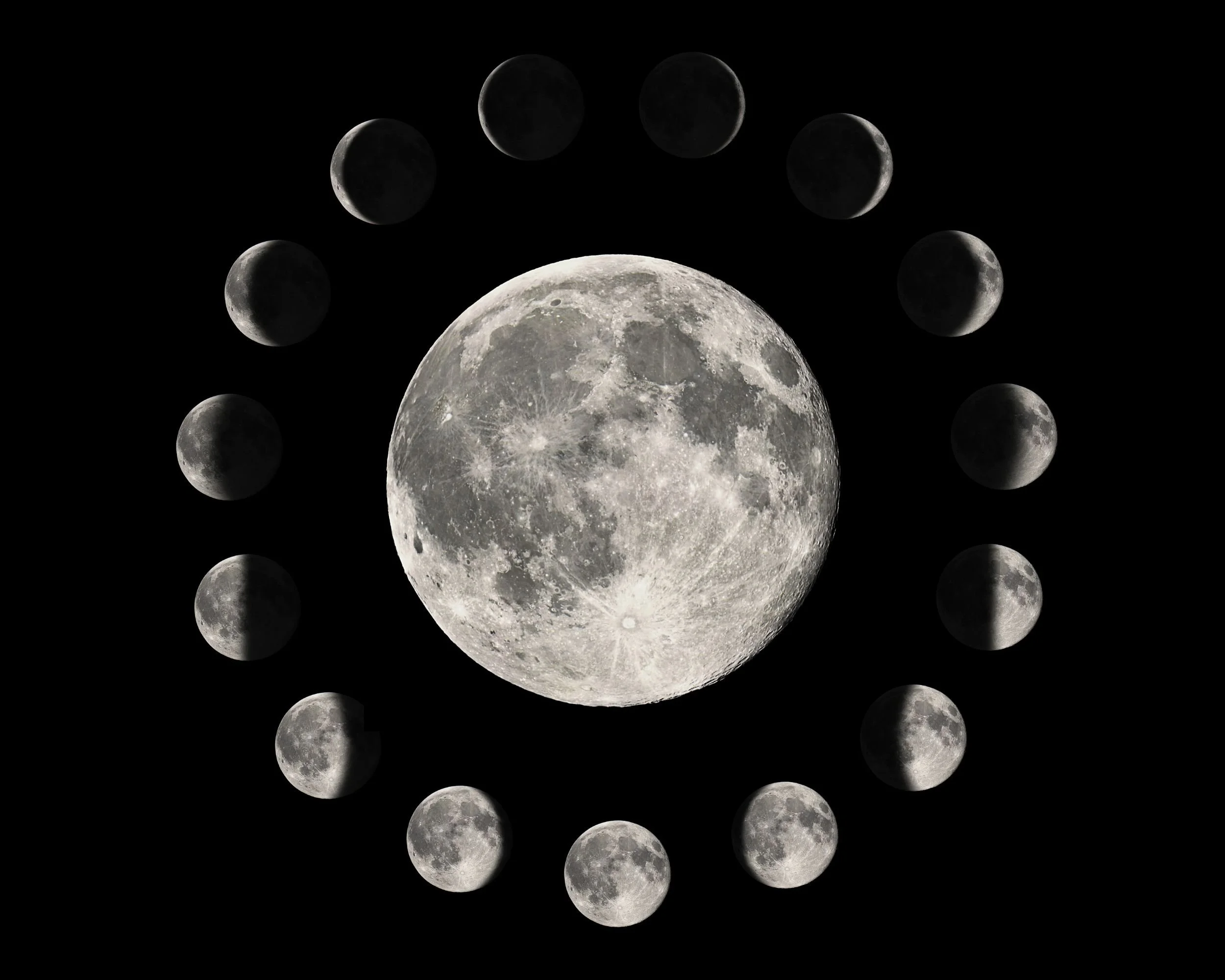
NASA details that the Moon goes through a cycle lasting about 29.5 days, during which its phases become visible to us. Although the same side always faces us, the sunlight changes while it travels around Earth, resulting in appearances of being full, half-lit, or obscured. This cycle consists of eight primary phases:
– New Moon: The moon is positioned between Earth and the sun, rendering the side we see dark.
– Waxing Crescent: A small wedge of light emerges on the right side (Northern Hemisphere).
– First Quarter: The right side of the moon is lit, appearing as a half-moon.
– Waxing Gibbous: More than half is illuminated, but it remains not fully lit.
– Full Moon: The whole face of the moon is bright and discernible.
– Waning Gibbous: The moon begins to lose its light on the right side (Northern Hemisphere).
– Third Quarter (or Last Quarter): A half-moon again, but this time, the left side is illuminated.
– Waning Crescent: A narrow sliver of light lingers on the left side before it goes dark once more.