The last Moon of the year is showcasing its beauty. It’s almost full, providing a lot to observe when you gaze up this evening.
What is the moon phase for today?
As of Wednesday, Dec. 31, the moon phase is Waxing Gibbous. As per NASA’s Daily Moon Observation, 88% of the moon will be lit up tonight.
With your unaided vision, you can catch a glimpse of the Mares Fecunditatis and Serenitatis, as well as Vaporum. If you use binoculars, you’ll also see the Endymion Crater, the Mare Nectaris, and the Clavius Crater. A telescope will uncover the Apollo 14 and 15 landing sites along with the Rima Hyginus.
When will the next full moon be?
The following full moon is set to take place on Jan. 3. The previous full moon occurred on Dec. 4.
What are the different phases of the moon?
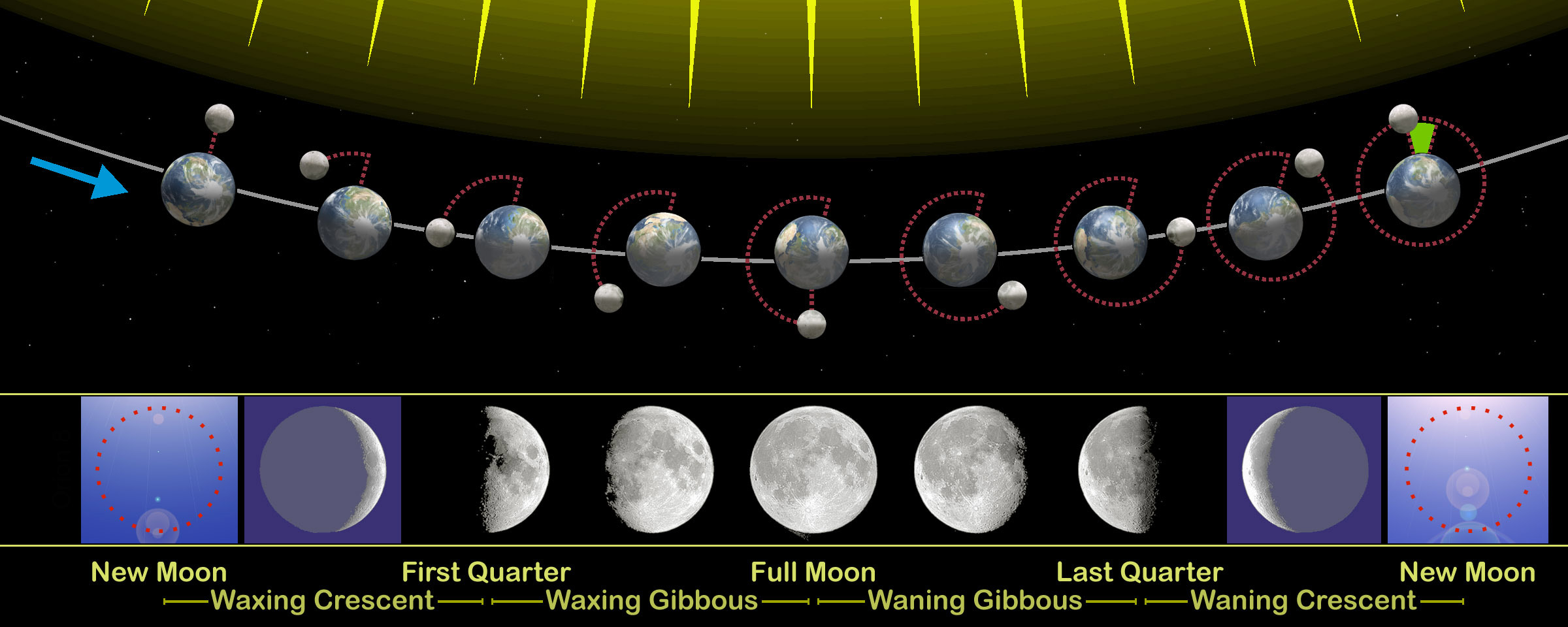
According to NASA, the Moon requires roughly 29.5 days to finish a complete cycle, referred to as the lunar cycle. Throughout this duration, the Moon transitions through several phases as it revolves around Earth. Even though the same hemisphere of the Moon perpetually faces Earth, the sunlight that lights up its surface varies over time. This results in the Moon appearing fully illuminated, partially lit, or completely dark at different points in the cycle. The lunar cycle includes eight primary phases:
New Moon – The moon sits between Earth and the sun, rendering the side visible to us dark (not seen by the eye).
Waxing Crescent – A small slice of light emerges on the right side (Northern Hemisphere).
First Quarter – The right half of the moon is lit, looking like a half-moon.
Waxing Gibbous – More than half is illuminated, but it hasn’t reached full brightness yet.
Full Moon – The entire face of the moon is lit and completely visible.
Waning Gibbous – The moon begins to diminish in light on the right side (Northern Hemisphere).
Third Quarter (or Last Quarter) – Another half-moon shape, but the illuminated side is now the left.
Waning Crescent – A narrow slice of light lingers on the left side before it fades to darkness once more.