It’s difficult to say if Nvidia has ever been subtle in its announcements. At the previous year’s CES, CEO and founder Jensen Huang astonished the industry with the introduction of the GeForce RTX 50 series paired with Nvidia Cosmos, its ambitious world-model project. This year’s event was more restrained concerning consumer GPUs, but the message to CES 2026 attendees was unmistakable: Nvidia seeks to dominate.
Nvidia has now become the first organization to exceed a $5 trillion valuation, a nearly unfathomable figure, and Huang and his team exhibit no signs of deceleration. The company’s aspirations now include factories, autonomous vehicles, robotics, and almost every area that can be trained, tested, or refined in simulation before it ever interacts with the real world. If something can be modeled, Nvidia intends to equip it.
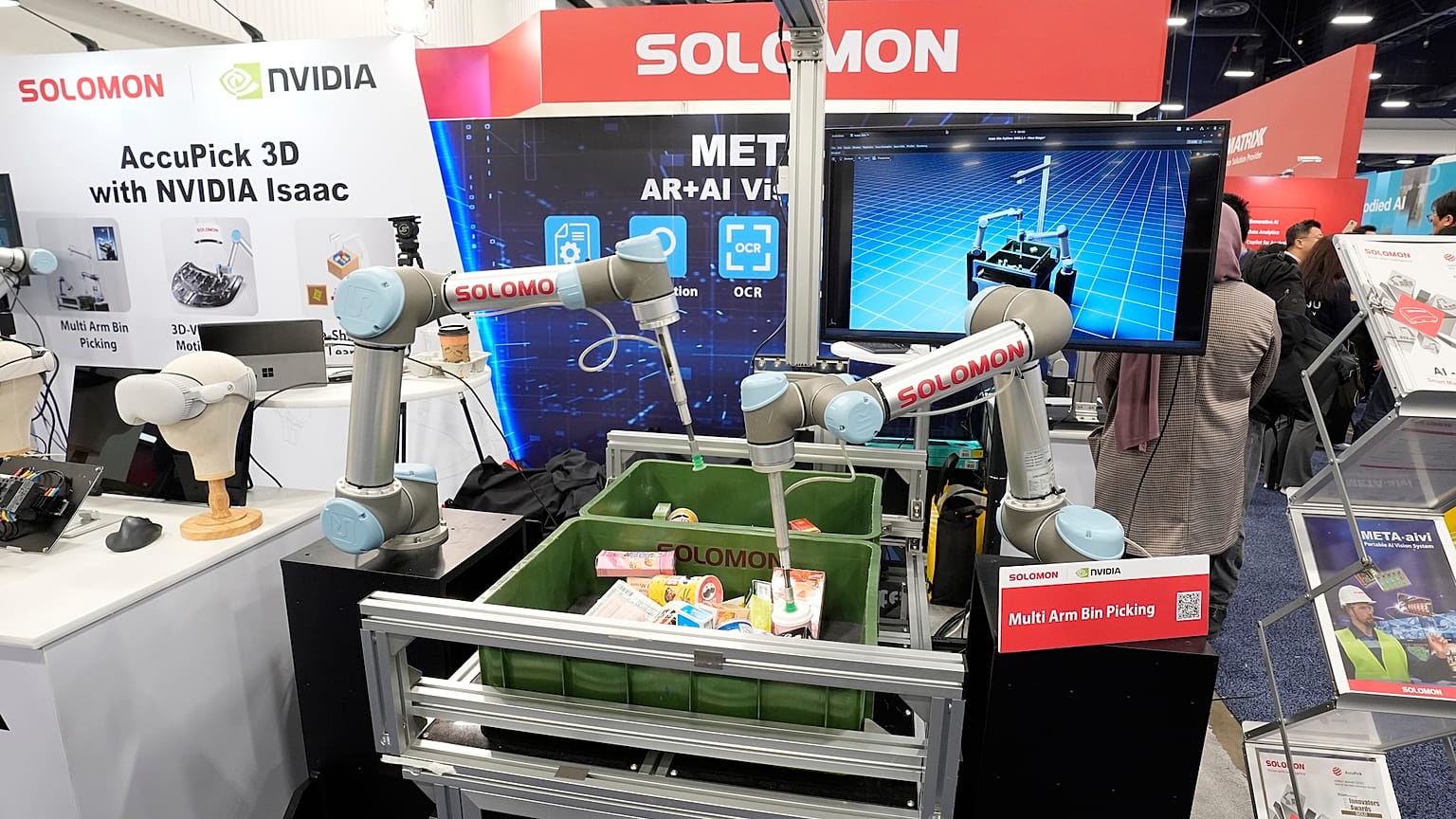
The primary buzzword of the night was “physical AI,” Nvidia’s label for AI systems that not only create content but actually perform actions. These models are trained in virtual settings using synthetic data and are then implemented into physical machines once they grasp how the world operates.
Huang presented Cosmos, a foundational world model that can simulate environments and anticipate movements, alongside Alpamayo, a reasoning model tailored specifically for autonomous driving. This is the technology that Nvidia claims will drive robots, industrial automation, and self-driving cars, as evidenced by the Mercedes-Benz CLA, which was demonstrated executing AI-defined driving on stage. The company also announced intentions to trial its own robotaxi service with a partner by 2027, utilizing Level 4 autonomous vehicles capable of operating without human intervention in designated areas.
Nvidia has not disclosed where the service will launch or who its partner is, but this move indicates a transition from being a background supplier to actively engaging in the self-driving competition. Huang has previously characterized robotics — including autonomous vehicles — as Nvidia’s second-most significant growth sector after AI itself.
If you were anticipating new consumer GPUs, you likely noticed quite quickly that there were none. Nvidia did not announce a single new GeForce card, which felt completely intentional. Instead, Huang dedicated most of the keynote to discussing Rubin, Nvidia’s next-generation AI platform that is already in full production.
Rubin is portrayed as more than merely a chip; it is an entire ecosystem. GPUs, CPUs, networking, and storage are all designed together to accommodate the immense (and environment-altering) computational demands of contemporary AI models at data center scale. Nvidia presented this as essential to keep pace with soaring AI demand, where training expenses, energy consumption, and bottlenecks are emerging existential challenges.
The absence of gaming hardware should not be interpreted as a snub, yet it is apparent that Nvidia is no longer motivated by gamers. It’s been evident for some time, but today’s conference starkly underscored the point. Instead, the company’s ambitions are fueled by hyperscalers, governments, and anyone attempting to automate everything that moves.
The third significant takeaway was Nvidia’s continuous effort to make itself indispensable through openness — or at least Nvidia’s interpretation of it. Huang repeatedly stressed that the company isn’t merely selling hardware, but open AI models that developers can genuinely utilize, fine-tune, and deploy (not to be confused with ChatGPT developer OpenAI). Nvidia now features open models across healthcare, climate science, robotics, embodied intelligence, reasoning AI, and autonomous driving, all trained on Nvidia supercomputers and provided as foundational building blocks. They’ve practically become the staple of technology.
Even personal AI agents received some stage attention, with demonstrations of local agents operating on Nvidia’s DGX Spark hardware. Nvidia aims to be the platform underlying every AI system, from vast data centers to individual desktops. It’s a sophisticated strategy — promote openness while still retaining control over the infrastructure.
Collectively, the keynote seemed like a proclamation. Nvidia is no longer chasing CES hype cycles. It is establishing itself as the backbone of an AI-driven world, where the most significant announcements do not occur on stage, and the most transformative products are not designed to fit under your desk.