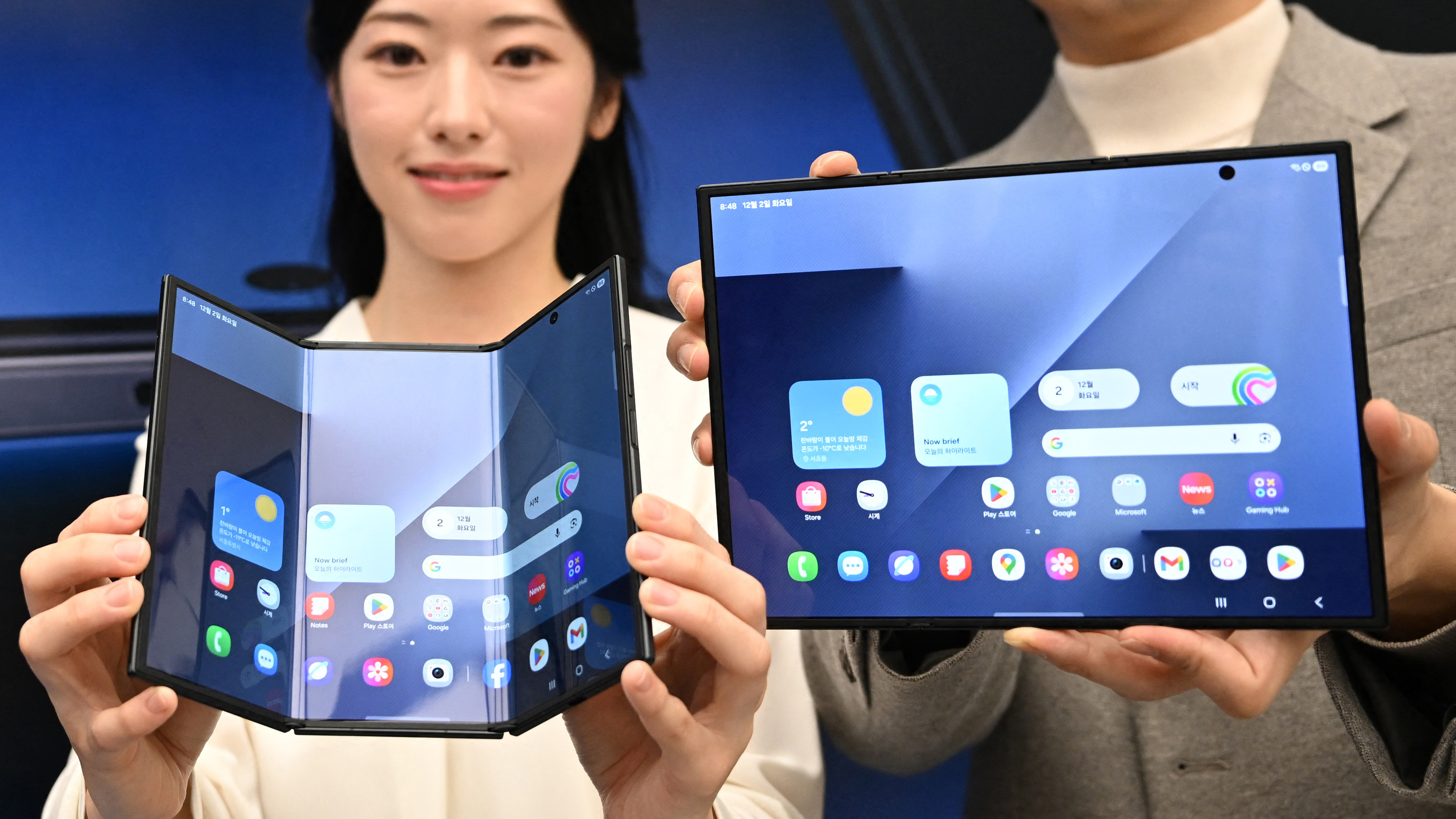
At CES 2026, I finally had the chance to experience the Samsung Galaxy Z TriFold. I’ve been following this phone for months, and until now it has had a limited launch in Korea, but mobile fans are eager for its U.S. release soon. Hoping for the best.
Viewing something on YouTube or examining a specifications sheet doesn’t compare to holding the device.
Or, in my instance, nearly dropping it (as shown around 25 seconds into this TikTok video).
One of our Android journalists has already explored the phone in detail, and it certainly has some unique characteristics. Nonetheless, as Mashable’s tech editor, this device has captured my thoughts.
In person, the TriFold is gorgeous. It represents the closest we’ve gotten to Westworld-inspired foldable tablets, resembling something plucked from a sci-fi series on Apple TV.
Most issues are related to software and UI quirks that could potentially be resolved in an update. You can perform tasks on its tablet-sized screen that aren’t possible on a standard foldable phone. For activities like photo editing, gaming, or word processing, you’ll enjoy expanded screen real estate.
During a demonstration, a colleague and I launched as many apps on the TriFold as we could, and it managed them smoothly. The phone features Samsung DeX, which provides a desktop-like interface for your Galaxy tablet or smartphone. You can operate four separate DeX sessions simultaneously, with multitasking being a focus of the UI.
For instance, if you’re watching a YouTube video on the 10-inch AMOLED inner display and you click on the comments, they appear in a side panel on the right third of the screen, which is quite clever.
Even straightforward tasks like searching for files or utilizing the touchscreen keyboard are more manageable on the 10-inch display.
I’ve come across feedback regarding the thickness of the phone, and yes, it is thick when closed. However, when opened, it’s surprisingly slender. We admired the sleekness of the 4.2mm Galaxy Z Fold 7, but Samsung claims the TriFold has a slimmer profile at just 3.9mm at its thinnest point.
This phone is poised to be the ultimate statement piece in 2026.
In my observation, foldable phones are still an excellent conversation starter. Whenever I use my Motorola Razr Ultra, people often comment and inquire about it. I usually prefer smaller flip-style foldables, but the TriFold might alter my preferences.
For early adopters and mobile aficionados, this groundbreaking phone will be a significant statement — if you can obtain it.
According to the Korean outlet The Bell, Samsung is selling the TriFold at a loss, making it more of a proof of concept rather than a mainstream smartphone. This may clarify its restricted release and indicates it could be challenging to acquire, even when it hits the States.
Beyond being a statement piece, it also serves as a notable jab at Apple.
As the world anticipates Apple’s first foldable, expected in fall 2026, Samsung is already demonstrating a tri-folding phone. If the leaked images of the iPhone Fold are correct, its design resembles the bulkier Google Pixel 10 Pro Fold rather than the Z Fold 7, which is widely viewed as the superior device in design and functionality.
The conclusion is this: After interacting with robots and trying on over a dozen pairs of smart glasses, the Galaxy Z TriFold is the standout product from CES that continues to occupy my thoughts a week later. Plus, this phone wasn’t even making its CES debut — it has been around.
If you’re an early adopter with roughly $2,500 to spend, think about jumping on the hype train for this tri-folding phone, despite its quirks. Just be careful not to drop it.