The Consumer Electronics Show unveiled a fresh range of laptops this week, and I was present in Las Vegas to examine them all. (Final step count: 69,142.)
Naturally, the latest processors were a focal point. This year’s Windows PCs will incorporate upgraded AMD, Intel, and Qualcomm chips that promise enhanced AI capabilities, improved integrated graphics, and extended battery longevity. Typical next-gen features, yet still noteworthy.
What’s even more captivating is the kind of laptops these processors will power. It seems every PC manufacturer is striving for thinner and lighter consumer and commercial models, boosting the selection of alternatives to the MacBook Air. The buzz surrounding the 2.18-pound Asus Zenbook A14 at last year’s CES likely fueled this movement.
Modularity emerged as another trend among enterprise devices at CES 2026. Dell, HP, and Lenovo are simplifying the process for users or IT departments to access PCs for repairs or replacements. Although none have achieved the level of right-to-repair advocate Framework, Lenovo is nearing that goal. It’s reassuring to witness mainstream manufacturers taking this matter earnestly.
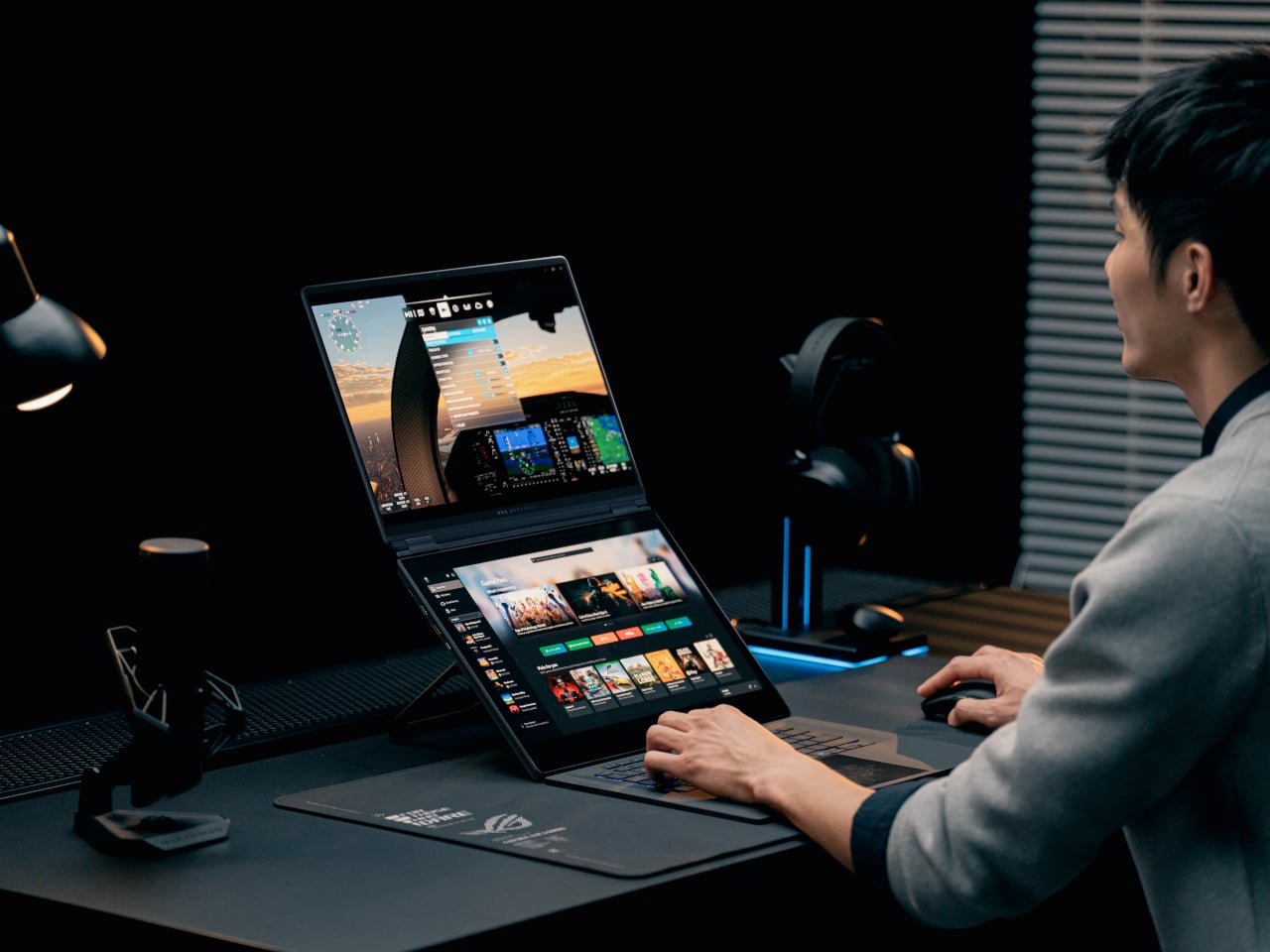
Finally, Asus and Lenovo are continuing to enhance screen innovations presented in past years. Asus revisited its dual-screen designs, while Lenovo delved into rollable displays and introduced a twisting screen. These new form factors make CES exhilarating year after year.
I ponder what unfolds when CES attendees and tech aficionados depart Vegas and return to the real world. An AI-related RAM shortage is anticipated to drive up laptop prices in the coming months. This may clarify why Acer and Asus haven’t disclosed prices for their collections, and why Lenovo and HP are only offering “estimated” or “anticipated” costs. Prices could rise prior to launch.
Let’s examine my top laptop picks from CES 2026 before the enthusiasm wanes. Spoiler: Lenovo and Asus enjoyed standout weeks at tech’s premier event.
Best laptop overall: Lenovo ThinkPad X1 Carbon Gen 14 Aura Edition
What a lengthy name, right? Don’t be misled by the title: Lenovo’s newest business laptop showcases a new “Space Frame” internal structure, facilitating easier DIY repairs. You can swap out its keyboard, speakers, fans, battery, and USB ports if necessary. Major PC manufacturers have usually shied away from such extensive modularity, but Lenovo deserves our Best of CES gold award in the laptop category. Let’s hope it sets a standard. It’s slated for release in Q1 at an estimated base price of $1,999.
Best ultraportable: Lenovo Yoga Slim 7i Ultra Aura Edition
Weighing in at 2.15 pounds, the Yoga Slim 7i Ultra Aura Edition is the lightest laptop I’ve ever held, yet it doesn’t come off as delicate or low-quality. It sports a stunning 2.8K 120Hz POLED display and maxes out with a top-tier Intel Core Ultra X9 Series 3 chip. Lenovo anticipates a starting price of $1,499.99 with a Q2 launch.
Best dual-screen laptop: Asus Zenbook Duo
The eye-catching dual-screen Zenbook Duo boasts a slimmer “hideaway” hinge, brighter and smoother 3K OLED screens, and a lighter Ceraluminum frame. While it might not appear to be a groundbreaking update on paper, its elegance is remarkable in person. Asus also refreshed the ROG Zephyrus Duo, its gaming variant, but it’s mainly catching up.
Best sequel: Asus Zenbook A16
Asus’ latest Zenbook A16 is the expanded version of the Zenbook A14, our ultralight Best of CES champion last year. It’s impressively lightweight for a 16-inch laptop, coming in at 2.65 pounds, nearly an ounce lighter than the 13-inch MacBook Air. I also admire its 3K 120Hz OLED touchscreen. It will be the first laptop to debut with Qualcomm’s new premier Snapdragon X2 Elite Extreme chip.
Best gimmick: Lenovo ThinkBook Plus Gen 7 Auto Twist
Lenovo’s twisting business laptop has evolved from concept to reality. Its upper section rotates between laptop and tablet modes on a motorized hinge, and you can adjust its position using vocal commands. Additionally, its 10MP webcam features face-tracking to keep the lid oriented towards you. It’s ideal for presentations and is expected to launch in June with an estimated starting cost of $1,649.
Best redemption arc: Dell XPS 14 and 16
In a surprising turn, Dell has revived its popular XPS laptop line a year after discontinuing it amid a perplexing rebrand. The new XPS 14 and XPS 16 come with lighter, slimmer designs featuring physical function rows, subtly outlined touchpads, and modular USB-C ports. Dell has addressed the series’ most contentious features, fulfilling customer demand. Select configurations of the 2026 XPS 14 and XPS 16 are now available starting at $2,049.99 and $2,199.99, respectively, with more affordable versions launching next month.
Most intriguing MacBook rival: Asus Expert