I’ve already discussed several trends from CES 2026, with smart glasses standing out in particular. During the last five days, I experimented with different smart glasses, ranging from electrochromic sports glasses with adjustable tint to the first AR gaming glasses globally boasting a 240 Hz refresh rate. This article is being composed on a flight from Las Vegas to New York City, utilizing the ultra-wide spatial computing display of the Xreal One Pro.
I favor smart glasses that do not have an integrated camera, primarily due to privacy worries and to sidestep the Google Glasshole issue.
If I had to single out one brand that left a lasting impression at CES, it would undoubtedly be Xreal. Nevertheless, they contend with established competitors such as Even Realities and TCL, as well as newcomers like MemoMind.
Explore the finest smart glasses of CES 2026, informed by my personal experience.
Best in show: ROG Xreal R1 AR gaming glasses and Real 3D
CES is all about “wow!” moments, and Xreal certainly delivered. They unveiled a multitude of new products, including the updated Xreal 1S AR Glasses, which come with enhancements and a price reduction, alongside a groundbreaking pair of gaming glasses. The not-yet-released ROG Xreal R1 AR gaming glasses were the highlight of the show.
The ROG Xreal R1 glasses boast an impressive AR display, projecting games onto a spatial screen of up to 171 inches. They are the first AR glasses worldwide to feature a 240 Hz refresh rate, utilizing new 1080p micro-OLED panels. I tested them with Elden Ring and Forza Horizon 5, and the visuals were astounding. However, this remains a niche product with specific use cases.
Xreal also provides a Real 3D conversion option for the 1S and One Pro glasses as an over-the-air update, converting 2D displays into 3D.
The new gaming glasses do not yet have a confirmed release date, but Xreal has assured that they’re set to launch in 2026, likely at a premium price.
Best sports glasses: Povec Optics C1 sunglasses
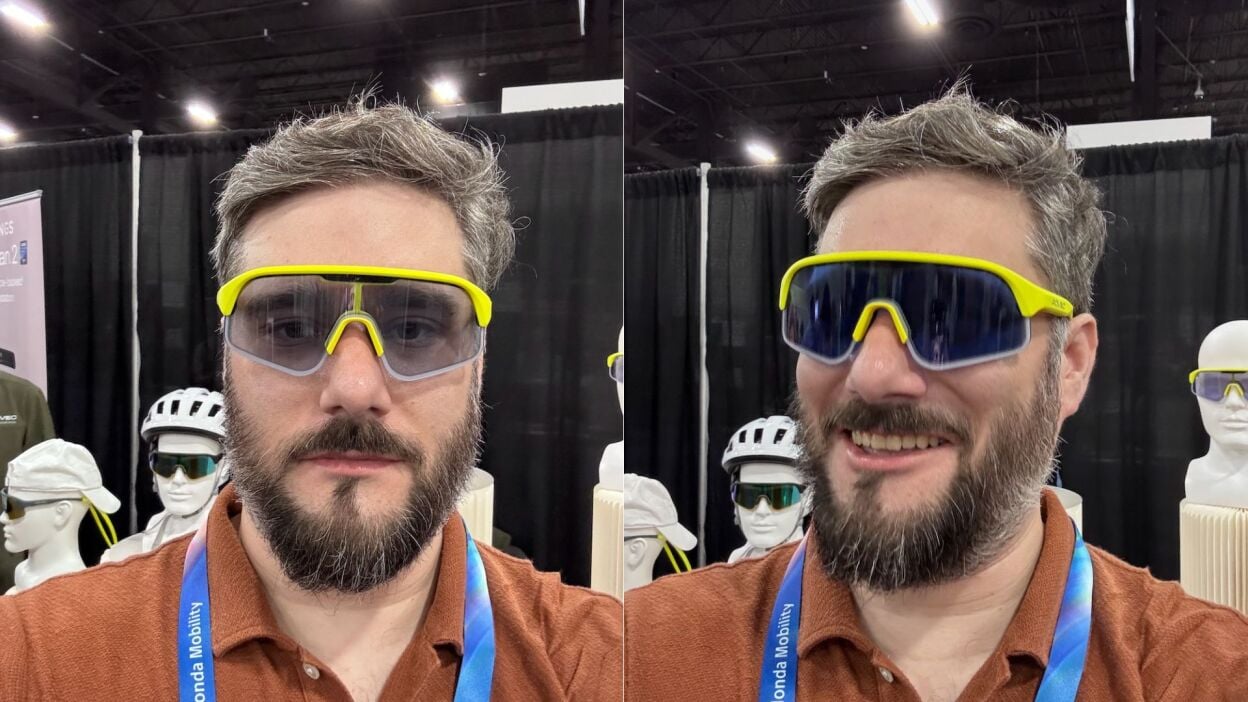
One of my favorite discoveries at CES is a pair of smart glasses devoid of a camera, heads-up display, or speakers. The C1 sunglasses from Povec Optics are electrochromic and allow for customizable tint. Just swipe your finger along the side to change the tint instantly. I’ve never encountered anything like these glasses.
I appreciate these glasses for not overcomplicating things, which is a frequent issue with smart glasses. They possess a magical quality.
The company’s founder stated that the glasses are set to be released in 2026. I recommend following Povec Optics on Instagram for the latest updates.
Best for entertainment: TCL RayNeo Air 4 Pro smart glasses
TCL has been in the smart glasses arena with its RayNeo line for some time, but without creating much impact in the market. That could change with the introduction of the new RayNeo Air 4 Pro smart glasses, expected to launch on Jan. 25.
These AR glasses showcase a floating virtual display and a genuine HDR display that is brighter, more vibrant, and clearer than any other smart glasses I’ve tested. They are priced at $299, a compelling offer in this segment.
Best audio glasses: Lucyd smart glasses
Before CES, I wasn’t familiar with Lucyd, but the brand has been producing smart glasses for a while. They stand out because they are priced comparably to regular glasses and have the look and feel of traditional eyewear.
Lucyd can price their smart glasses as low as $99 by keeping their approach simple. Their frames come equipped with built-in speakers for hands-free communication, listening to music, getting quick responses from ChatGPT, or answering calls.
A representative from Lucyd mentioned that the company aims to create the best eyewear at an affordable price. The glasses delivered excellent sound quality, and their sports glasses, part of a collaboration with Reebok, are especially noteworthy, along with their prescription frames. Achieving a lightweight, stylish, and budget-friendly design in smart glasses is rare, but Lucyd manages to do so.
You can purchase Lucyd smart sports glasses on the brand’s website and other online retailers, with prices beginning at $179 for sports models. Standard Lucyd frames are available on Amazon, starting at $99.
Best heads-up display: Even Realities G2
Even Realities showcased the finest display smart glasses I’ve tested. The Even G2 Smart Glasses may not be new to CES, but they featured the best heads-up display and live translation capabilities. I engaged in a conversation in Italian and English about Formula 1 and Lewis Hamilton, with translations happening in real time.
I was particularly impressed by the navigation features, teleprompter mode, and the design. Unlike the majority of smart glasses, they possess slim frames that prevent them from looking bulky. Even Realities also includes a smart ring for controlling the glasses via touch.
You can acquire Even Realities G2 glasses from the brand’s website for $599.
Best newcomer: XGIMI MemoMind AI glasses
XGIMI announced a new series of display smart…