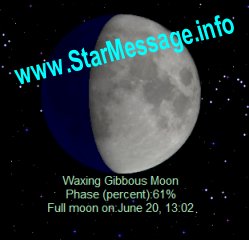
The moon is reverting to its crescent shape as we near the New Moon. While total darkness is still a few days off, some surface features are still discernible. Keep reading to find out what you can observe.
What is the current moon phase?
As of Saturday, Dec. 13, the moon phase is Waning Crescent. This indicates that 34% of the moon is illuminated tonight, according to NASA’s Daily Moon Observation.
This evening, without any optical tools, you can spot Kepler Crater and the Oceanus Procellarum. With binoculars, the Grimaldi Basin, Clavius Crater, and the Mare Humorum become visible. If you use a telescope, you can also identify Reiner Gamma, Schiller Crater, and Fra Mauro Highlands.
When will the next full moon be?
The upcoming full moon is set to occur on Jan. 3.
What are the different moon phases?
NASA clarifies that the Moon experiences a cycle of approximately 29.5 days, during which we witness its various phases. Although we consistently observe the same side of the Moon, the sunlight reflecting off it alters as it orbits Earth, making it appear full, half-lit, or sometimes entirely obscured. The cycle includes eight primary phases:
New Moon – The moon is situated between Earth and the sun, making the visible side dark (invisible to the eye).
Waxing Crescent – A tiny sliver of light begins to appear on the right side (Northern Hemisphere).
First Quarter – Half of the moon is bright on the right side, resembling a half-moon.
Waxing Gibbous – More than half is illuminated, but it is not completely full yet.
Full Moon – The entire surface of the moon is lit up and fully visible.
Waning Gibbous – The moon starts to lose light on the right side (Northern Hemisphere).
Third Quarter (or Last Quarter) – Another half-moon, but now it is the left side that is illuminated.
Waning Crescent – A narrow sliver of light remains on the left side before it fades to darkness again.