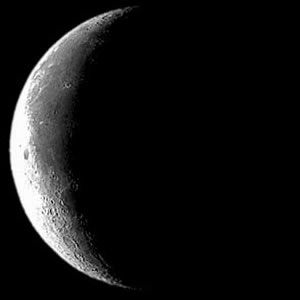
The moon has become visible once more, and following several nights of obscurity, with keen observation, you ought to be able to spot several craters of mares.
What is the moon phase today?
As of Tuesday, Dec. 23, the moon phase is Waxing Crescent. Per NASA’s Daily Moon Observation, 11% of the moon will be illuminated this evening.
With the naked eye this evening, you can observe the Mares Crisium and the Fecunditatis. Utilizing binoculars or a telescope, you’ll also have the opportunity to see the Endymion Crater.
When will the next full moon occur?
The upcoming full moon will take place on Jan. 3. The previous full moon occurred on Dec. 4.
What exactly are moon phases?
As per NASA, the Moon requires approximately 29.5 days to finish one complete cycle, known as the lunar cycle. Throughout this duration, it undergoes various phases as it revolves around Earth. While the same side of the Moon perpetually faces us, the quantity of sunlight reflecting off its surface alters, causing it to seem fully illuminated, partially lit, or entirely hidden at alternate times during the cycle. This mechanism is divided into eight primary lunar phases:
New Moon – The moon is positioned between Earth and the sun, rendering the side we see dark (in other words, it’s invisible to sight).
Waxing Crescent – A small sliver of illumination emerges on the right side (Northern Hemisphere).
First Quarter – Half of the moon is illuminated on the right side. It resembles a half-moon.
Waxing Gibbous – More than half is illuminated, yet it’s not completely full.
Full Moon – The entire face of the moon is lit and entirely visible.
Waning Gibbous – The moon starts to lose light on the right side. (Northern Hemisphere)
Third Quarter (or Last Quarter) – Another half-moon, but at this point the left side is illuminated.
Waning Crescent – A slender sliver of light remains on the left side before it goes dark once more.