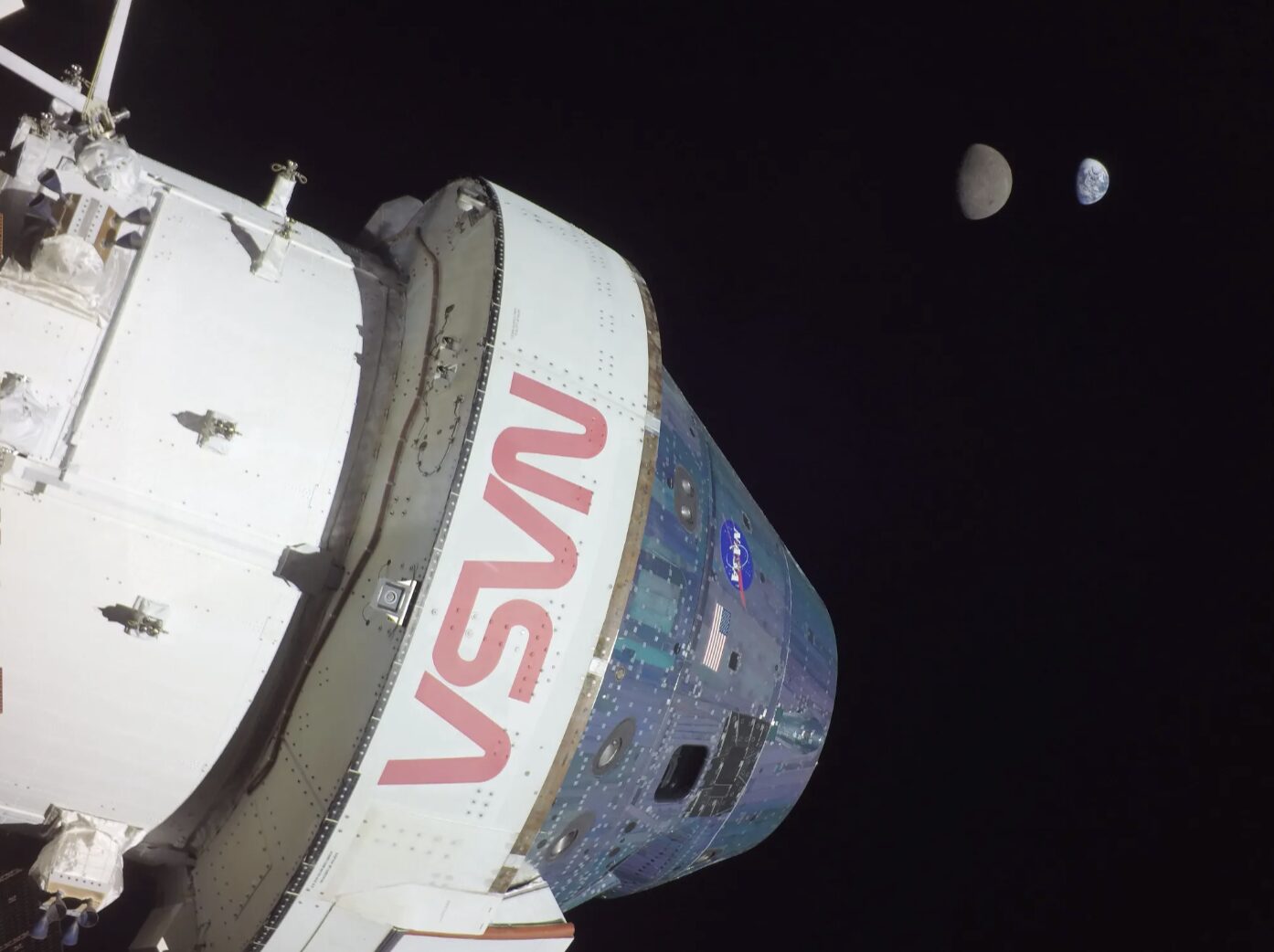
NASA will substitute the Artemis mission, originally intended to land astronauts on the moon, with a revamped approach aimed at increasing the launch frequency of its mega rocket. In a news briefing, NASA administrator Jared Isaacman revealed a major transformation of the moon-to-Mars initiative. The alterations cancel the Artemis III lunar landing, shifting it to a low-Earth orbit flight for a crew to practice rendezvous with SpaceX or Blue Origin lunar landers, or possibly both.
These modifications will also influence the scheduling of future Artemis missions, moving the updated Artemis III flight to mid-2027, potentially paving the way for Artemis IV and Artemis V to take place at the beginning and end of 2028. According to the revised plan, Artemis IV would be the inaugural mission to land astronauts on the lunar surface.
The revisions to the program were disclosed during a briefing on the repairs to the Space Launch System rocket, which is set to launch Artemis II, a 10-day lunar flyby mission with a crew, as soon as April.
“There has to be a more effective way in line with our legacy,” Isaacman stated. “We didn’t just leap to Apollo 11. We progressed through Mercury, Gemini, and numerous Apollo missions, maintaining a launch cadence every three months. We should not be satisfied with the current pacing. We ought to return to fundamentals and execute what we know is effective.”
NASA officials indicated that the shakeup seeks to tackle a broader issue: the agency’s most powerful rocket is being launched too infrequently, with the same technical challenges recurring from one mission to another. Isaacman highlighted hydrogen leaks on Artemis I and helium flow issues on Artemis II as proof that a three-year interval between launches is not viable. When teams launch only every few years, they forfeit their “muscle memory” — the practical, hands-on experience essential for safely and efficiently managing a complex rocket.
To remedy this, NASA is re-envisioning the Artemis campaign as a phased test program. The agency now intends to launch approximately every 10 months, standardize its rocket configuration, and rebuild internal expertise that has deteriorated over time.
A significant adjustment is viewing Artemis III as a practice mission in Earth orbit instead of a landing effort. This mission will provide astronauts and engineers the opportunity to test how the Orion spacecraft and the landers interact, fly in tandem, and potentially dock. It will also enable crews to start evaluating life-support systems and other equipment inside the landers before sending them to the moon’s surface. Officials noted they might even carry out limited tests of the new moonwalking suits in a weightless environment, if schedules allow.
NASA officials argued that it is more rational to pinpoint issues and rehearse operations near home, in Earth orbit, rather than uncovering them for the first time during a lunar landing attempt. If the accelerated launch schedule remains intact, Artemis IV and Artemis V could present NASA with two chances in 2028. Officials stressed that the timeline still relies on hardware readiness and safety evaluations.
Progress towards Gateway, a small space station orbiting the moon intended as a staging point for future missions, is not being set aside, officials noted. However, they clarified that the agency’s focus is on enhancing the frequency of Artemis flights before expanding the lunar outpost.
The fact that China is also striving to land its crew on the moon before 2030, possibly outpacing the United States, is not forgotten. NASA has not dispatched humans to the lunar surface since Apollo 17 in 1972. While no other nation has continued that monumental achievement for humanity, that situation may not stay the same.
“[In] the 1960s [it] turned out, in hindsight, we had a near-endless schedule margin there,” Isaacman remarked. “That is certainly not the case today. I’d say this is very, very close from a timeline perspective.”
The revised initiative emerges as engineers work on immediate problems concerning Artemis II, the first crewed flight of the program. Following a successful “wet dress rehearsal” — an entire countdown test filling the rocket with super-cold fuel — teams found that helium was not flowing correctly to the engines in the rocket’s upper stage.
Helium functions to pressurize tanks and aid in delivering fuel into the engines. Without adequate helium flow, the rocket cannot safely launch. Because accessing the upper stage at the launchpad is difficult, NASA moved the assembled rocket back into the Vehicle Assembly Building, where it was initially put together.
While inside, technicians will remove and examine suspected helium system components, replace any malfunctioning hardware, and tackle additional tasks. This includes swapping batteries in the flight termination system — the emergency protocol that can destroy the rocket if it deviates off course — changing out a seal on the line feeding liquid oxygen into the rocket, refreshing items within Orion, and giving the closeout crew further practice in sealing the capsule.
NASA intends to streamline this process to preserve the possibility of launching Artemis II on April 1, April 3 through 6, or April 30. They have not disclosed potential launch dates beyond April, despite numerous inquiries from reporters.