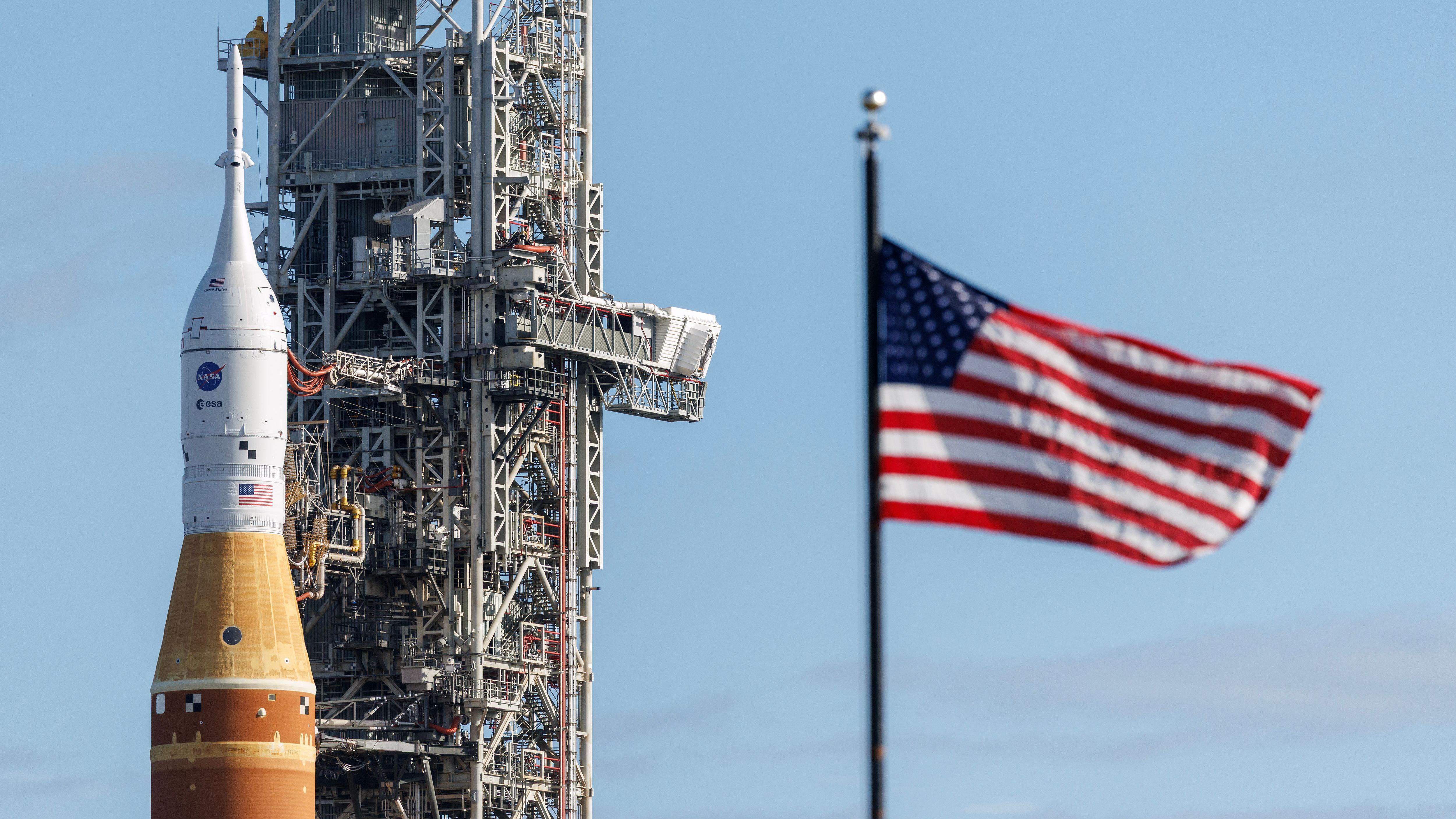
NASA is reevaluating its announcement from Friday regarding the March moon launch due to a newly identified issue with the Artemis II rocket. Officials are set to take the rocket off the launch pad on Tuesday, Feb. 24. An issue with helium flow in the Space Launch System was found, which is vital for protecting the engine and maintaining fuel tank pressure. While the helium system functioned properly during a recent launch rehearsal, engineers are worried due to a similar problem that arose prior to the Artemis I launch in 2022. The issue lies in the rocket’s upper stage, which utilizes liquid hydrogen and oxygen. Engineers are looking into possible causes, such as a connection point, a valve, and a filter. Addressing these issues would necessitate work at the Vehicle Assembly Building in Cape Canaveral, Florida. A delay seems probable unless a fix is found at the pad. “We will start preparations for rollback, which will remove the March launch period from consideration,” stated NASA administrator Jared Isaacman in a post on X.
Artemis II represents a 10-day mission around the moon, which tests the Orion spacecraft with crew members onboard. It marks NASA’s first crewed mission beyond Earth’s orbit since 1972, paving the way for a moon landing during Artemis III. The Artemis initiative aspires to create a lasting human presence on the moon for future Mars exploration. The crew started their quarantine at the Johnson Space Center but were released following the delay announcement. Swift action could allow for an April launch, with possible windows on April 1, April 3-6, and April 30. NASA has not publicly disclosed further launch dates. The rocket is currently secure, employing a backup method to sustain conditions in the upper stage, which is critical for the trajectory of the spacecraft. NASA has confirmed that the helium system was deemed safe for Artemis I, but given the involvement of humans, the requirements are more stringent for Artemis II. NASA press secretary Bethany Stevens mentioned that the team was working on troubleshooting the issue overnight. A comprehensive briefing is scheduled for later this week. Delays are a frequent occurrence in space missions, and it is crucial to resolve issues prior to a crewed flight, Isaacman commented. “The President established Artemis to exceed the achievements of Apollo. We will construct a Moon base and conduct ongoing lunar missions,” he wrote.