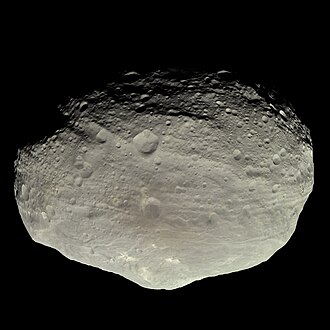
A recently launched telescope in Chile has detected a rapid asteroid, measuring as broad as eight football fields, which completes full rotations in less than two minutes. The Vera C. Rubin Observatory, built to continuously image the entire southern sky, discovered asteroid 2025 MN45 prior to starting its complete scientific operations. During a short test period, the telescope began to reveal the tiniest celestial objects in the universe.
Over the course of seven nights, Rubin’s extensive digital camera collected hundreds of thousands of images. Astronomers pinpointed over 2,100 previously undiscovered asteroids in these images. By examining variations in their brightness, researchers were able to ascertain their rotation speeds and surface characteristics.
Positioned in the primary asteroid belt situated between Mars and Jupiter, 2025 MN45 is currently the fastest-rotating large asteroid recognized thus far, as stated by Sarah Greenstreet, an astronomer at the National Science Foundation NOIRLab, who presented this finding at the 247th American Astronomical Society meeting in Phoenix. Historically known fast rotators complete a rotation in roughly an hour, with some taking around 30 minutes, though those had less reliable information, she conveyed to Mashable.
“If you were to stand upon this ultra-fast rotating asteroid, you’d be moving at almost 45 mph,” Greenstreet remarked.
Asteroids are remnants from the solar system’s inception 4.5 billion years ago. Investigating their spin, make-up, and the processes of breaking and reforming aids scientists in comprehending planet formation, including that of Earth.
These discoveries are among the first Rubin observations released in a scientific journal, appearing in The Astrophysical Journal Letters. They unveil a population of asteroids that had seen minimal study previously. As the survey progresses, findings like these could alter scientists’ perspectives on asteroid collisions, internal structures, and the early solar system.
Preliminary results indicate that collisions may not be the only reason asteroids achieve extreme speeds, leading astronomers to investigate new theories. An asteroid reflects sunlight, and as they spin, their uneven surfaces capture light, generating variations in brightness. This trend enables scientists to calculate rotation durations.
For decades, astronomers assumed they grasped the spin limit. Most asteroids larger than a few hundred yards were presumed to be loose collections of rock held together by gravity. Spinning too rapidly would lead to their disintegration, with a rotation cap of about two hours, Greenstreet stated.
Rubin’s initial findings are perplexing. Among the newly found asteroids, researchers recognized 76 with dependable spin assessments. Nineteen spun faster than the widely accepted threshold, and three, including 2025 MN45, completed rotations in under five minutes.
To remain intact, the 710-meter-wide asteroid must be comprised of solid rock, likely a remnant from a denser core of a larger object. A cosmic crash might have liberated it. “Determining the origin of this fastest-rotating asteroid would be particularly challenging,” Greenstreet informed Mashable. “It’s also feasible that its parent body was entirely shattered during the collision.”
While 2025 MN45 is presently the fastest, this could soon change. Astronomers anticipate that the telescope will uncover more asteroids of this nature. “Given their distance, there exists a vast population of asteroids in the main belt that we haven’t had the chance to study before,” Greenstreet mentioned at the meeting, “but the Rubin Observatory is now enabling us to start getting a glimpse.”