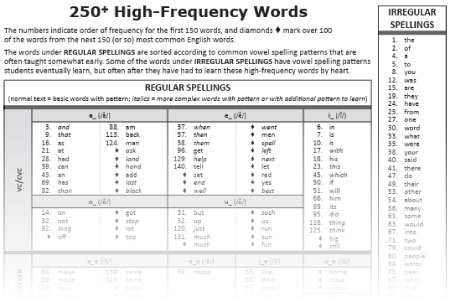
If you look online, you’ll find discussions about American schoolchildren’s spelling skills. A TikTok educator, identified as @oopsdaaliya, showcased her first-grade pupils’ shortcomings in a spelling assessment of common words such as “the,” “with,” and “has.” Most of the students had difficulties, often writing just one letter or leaving spaces blank. The video has achieved 1.3 million views.
“This is my reality,” she expressed in the video. “I genuinely don’t know what action to take.”
On a teachers’ subreddit, a parent remarked, “5th graders struggle with spelling, why?” which elicited many replies from teachers. Several cited the spelling dilemma to the “whole language” theory, which set aside science-driven literacy strategies, including spelling, in favor of outdated reading methods.
“[N]ow we have a generation of students facing challenges,” remarked one commentator.
Though anecdotes raise alarms, statistics are lacking. There isn’t a national spelling evaluation, and few states test spelling, obscuring the extent of the issue.
Yet, literacy specialists concur that the whole language method deprived countless students of structured spelling education for years. Additional educational policies have also overlooked the significance of spelling in reading and writing. While many institutions have shifted back to phonics-based literacy, spelling frequently remains neglected.
Experts caution against viewing spelling as outdated because of digital tools like spellcheck and Grammarly. Depending on these without acquiring spelling skills can place students at a disadvantage. Mastering spelling correctly gives the “foundational linguistic knowledge” essential for effective communication, according to Dr. Brennan Chandler from Georgia State University.
“Spelling has genuinely diminished over time,” Chandler remarks, “even with the growing evidence that spelling is a crucial factor in reading development, not just an optional extra.”
“Everyone genuinely desires this”
Parents recognizing the significance of spelling in the literacy crisis should not assign blame to themselves or educators, Chandler suggests. As someone who tutors dyslexic students and conducts research in classrooms, he often hears from parents and teachers wanting proper spelling education.
“This is where I feel frustrated because everyone really wants this, yet we’re still overlooking it,” states Chandler, who is in the process of creating a spelling curriculum. (He also provides guidance for the literacy organization Amplify.)
Parents often feel ill-equipped to teach spelling at home due to constraints of time and patience. There are few trustworthy home learning resources compared to those available for subjects like math and English.
Students and their parents may be reluctant to engage in the effort needed for spelling mastery, particularly with error-correction technology at hand. However, these tools, according to Chandler, “conceal students’ struggles and further normalize the decline of direct spelling instruction.”
For nearly thirty years, literacy programs have neglected formal spelling teaching, leaving educators unprepared and without the necessary resources for explicit instruction.
While educators might employ word lists and quizzes, the absence of a structured curriculum leads to inconsistent teaching, says Dr. Richard Gentry, co-author of “Brain Words: How the Science of Reading Informs Teaching.”
Gentry recommends 20 minutes of daily spelling instruction in the classroom, focusing on specific rules, phonics patterns, and foundational vocabulary appropriate for each grade.
“This type of instruction using a curriculum promotes long-term mastery instead of merely memorizing words temporarily for a test or relying on digital tools without teacher oversight,” Gentry asserts.
When to be concerned about your child’s spelling
Parents should keep an eye on their child’s spelling from kindergarten. By the conclusion of first grade, students should exhibit a more advanced spelling understanding, applying logical syllable structures even if they don’t correctly spell intricate words.
If they find letter recognition and phonics challenging in kindergarten, it’s vital to address foundational knowledge promptly.
Chronic poor spelling may suggest dyslexia or similar hurdles. If this issue is hidden by technology or insufficient school instruction, determining the underlying cause might take years.
Gentry advises parents to monitor their child’s spelling skills and the school’s curriculum throughout their elementary education.
What children gain when they learn to spell
Deanna Fogarty, from Wilson Language Training, emphasizes that parents shouldn’t presume spelling isn’t being taught if their child isn’t excelling.
Educators might focus on rote memorization rather than conveying spelling rules, or spelling may be included in English Language Arts but not taught according to scientific methods.
In English, there are over 1,100 ways to represent 44 sounds, notes Fogarty, indicating that reliance on memorization is insufficient for students.
For instance, they must understand that “c” yields /s/ before “e,” “i,” and “y,” and /k/ before “a,” “o,” and “u.” Grasping these rules enhances spelling comprehension beyond mere memorization. Chandler suggests “Uncovering the Logic of English” as a resource for understanding these conventions.
Fogarty, who has tutored dyslexic students, states that learners often feel relieved when they discover that standardized rules govern English spelling, countering the perception that mastering it is overly challenging.
Chandler notes that as children become adept at spelling, their drive to improve increases. Once they are proficient, they can strategically utilize tools like autocorrect. However, relying on these tools from the outset may impede the development of critical reading and writing skills.
He stresses that the ability to write fluently and accurately can shape one’s future.