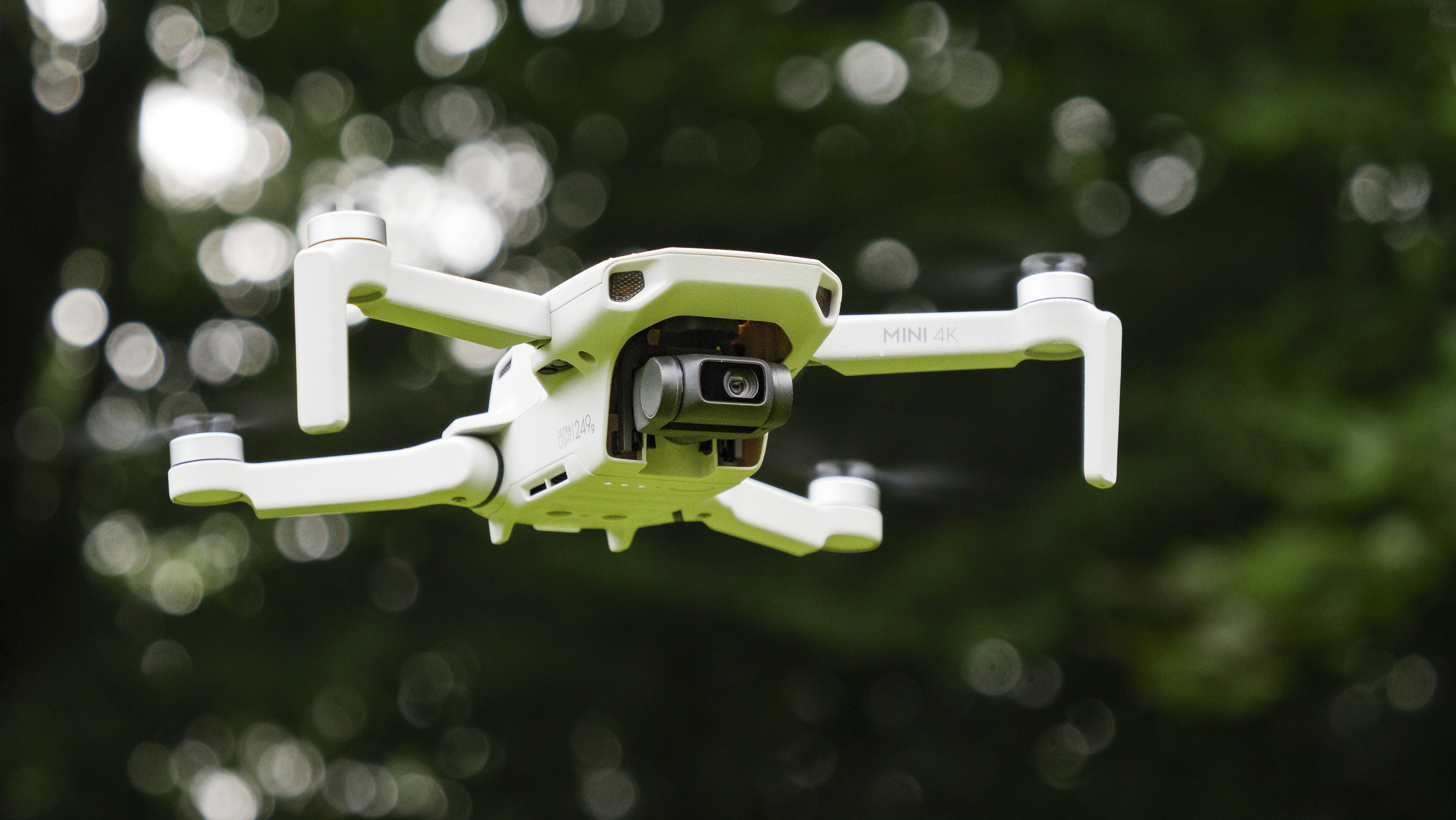
As a seasoned drone pilot, I have high standards. For an extended period, DJI held a stronghold over the U.S. drone market, with other brands lagging significantly behind. But that’s beginning to shift. Recently, new challengers have entered the scene at a crucial time as DJI faces a possible ban in the U.S.
One intriguing alternative is the Antigravity A1 drone, produced by Insta360. Unlike the majority of drones, which function primarily as airborne cameras, the Antigravity A1 is a 360-degree camera that possesses the ability to fly.
This drone captures its entire environment in 8K resolution, providing various benefits. Let’s begin with the hardware.
The Antigravity A1 8K 360 Drone will be offered in three packages starting December 4 at Antigravity and Best Buy:
– Antigravity A1 8K 360 Drone Starter Package — $1,599
– Antigravity A1 8K 360 Drone Explorer Package — $1,899
– Antigravity A1 8K 360 Drone Infinity Package — $1,999
Contents of the package:
I think I received the Infinity package, which includes a carrying case, a one-handed controller, goggles, four batteries for the drone, a battery for the goggles, extra propellers, screwdrivers, and a charging dock for three batteries. The drone weighs just 249 grams, which means fewer regulatory requirements. It’s a foldable drone featuring four extendable arms and automated landing gear.
The controller is equipped with various buttons and switches for operating the drone. Essential functions include altitude control, drone rotation, and forward motion.
The goggles come with dual Micro-OLED displays offering a resolution of 2,560 x 2,560 pixels, along with an external display for software updates and view sharing. The battery is attached to a lanyard, which helps alleviate weight on your face. The headset connects through a USB-C data cable, not for power.
When folded, the drone is compact, fitting nicely into a jacket pocket, although the goggles and controller require additional space.
Operating the Antigravity A1 360 drone:
Previously, my preferred drone was the DJI Avata 2, an FPV model. The Antigravity A1 provides a comparable experience with a headset and one-handed controller, capturing everything in your vicinity with sensors mounted on the top and bottom. The headset allows for panoramic viewing while flying, featuring a picture-in-picture function for navigation.
The control interface entails pointing the controller to steer. Unlike the Avata, which relies on wrist movements, the A1 necessitates arm movements. The A1’s controller has a greater number of controls, making it seem less user-friendly, possibly due to my muscle memory from using the Avata.
The A1 is equipped with conservative anti-collision sensors, making navigation in tight spaces more challenging. I tested the drone under windy and cold conditions, achieving flight times of 18 to 20 minutes, which is slightly lower than the claimed 24 minutes.
Capturing everything simultaneously:
Using the drone while exploring is an extraordinary experience. You can ascend to 400 feet and take in the scenery. For content creators, the A1 captures a complete sphere of footage, removing the necessity for a dedicated camera operator. You can fine-tune camera focus in post-production.
The Antigravity A1 grants freedom to both casual users and content creators. It simplifies the process of capturing events by emphasizing proximity instead of camera adjustments.
While the technology is not without flaws, the opportunity to record dynamic scenes is thrilling. However, I encountered issues retrieving the captured footage, which I’m currently addressing with Antigravity.
It all comes with a price:
DJI’s prosperity in the U.S. is partly due to its reasonably priced drones. The Antigravity A1 starts at $1,599, with the top package priced at $1,999. It’s an investment, so one must appreciate the 360-degree camera experience.
As a first-generation product, there are aspects to enhance, such as streamlining the controller and modifying collision sensor parameters. Nevertheless, the A1 brings an exciting new freedom to drone flying.
Is the Antigravity A1 drone a worthwhile investment?
Although my experience with the drone was overall positive, I cannot fully endorse it until I resolve the file export problem. The Antigravity A1 serves as a promising substitute for DJI drones, even though it lacks budget-friendly options for newcomers. Given Insta360’s origin in China, there is apprehension regarding potential bans.
Antigravity A1 360 8K Camera Drone: Specifications
– Takeoff weight: 249 grams with Flight Battery
– Folded dimensions: 141.3 × 96.2 × 81.4 mm
– Unfolded dimensions: 308.6 × 382.3 × 89.2 mm
– Flight time: 24 minutes with Flight Battery; 39 minutes with High-Capacity Flight Battery
– Max flight distance: 8.0 miles with Flight Battery; 14.3 miles with High-Capacity Flight Battery