Two television behemoths, Samsung and LG, are enthusiastically advertising their latest Micro RGB TVs. But do these TVs genuinely surpass OLEDs, and is it wise to buy now or wait for prices to decrease? We investigate the particulars.
What have Samsung and LG revealed?
In mid-December, Samsung and LG preemptively kicked off CES 2026 by rolling out their new Micro RGB TV models.
Samsung announced plans to broaden its Micro RGB TV range in 2026, introducing models in 55-, 65-, 75-, 85-, 100-, and 115-inch sizes, following the debut of a 115-inch TV in 2025.
LG disclosed it would launch its first premium RGB TV at CES 2026, named the Micro RGB evo, which will feature the tiniest individual RGB LEDs ever found in an LG TV. The TV will come in 75-, 86-, and 100-inch options.
Alright, but what exactly are Micro RGB TVs?
These are enhanced LCD televisions.
Initially, LED TVs utilized LEDs to backlight an LCD panel. The subsequent advancement came with mini-LED TVs, which employed smaller LED modules for backlighting, resulting in improved energy efficiency and picture quality.
Micro LED TVs brought forth even tinier LEDs, allowing for reduced energy use and enhanced picture quality. Unlike LCDs, these LEDs generate their own light at the pixel level.
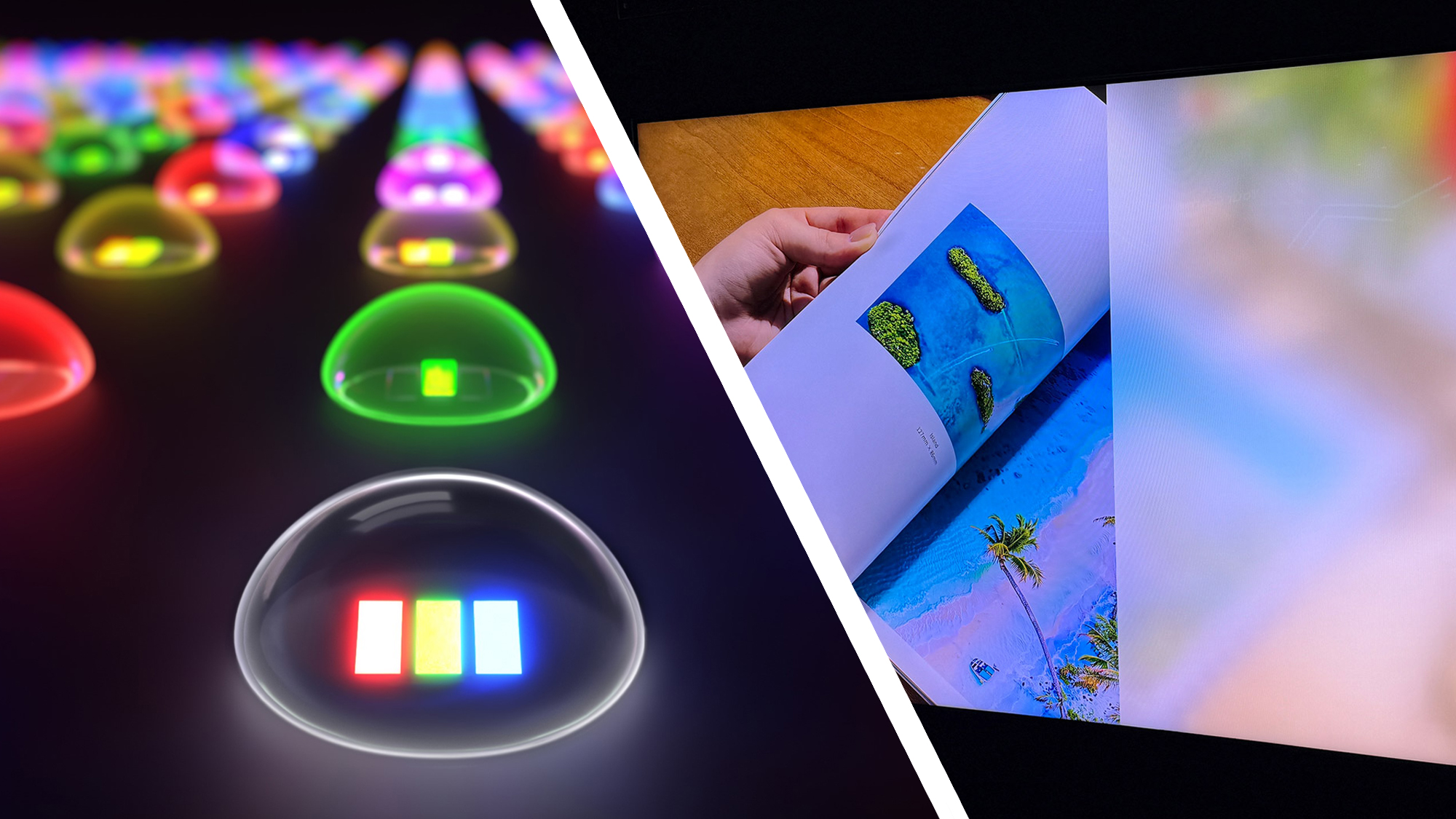
Micro RGB TVs, a marketing label from Samsung and LG, use petite LEDs that emit red, green, or blue light, instead of just white or blue. Nevertheless, they still function as LCD TVs, with LEDs providing both backlighting and colors, while the image is rendered on an LCD panel.
These TVs rival OLED models, which feature pixels that produce their own light and color, delivering superior picture quality with deeper blacks and high contrast. However, OLEDs are pricey to manufacture and may deteriorate over time.
Are these Micro RGB TVs worthwhile?
This is a multifaceted inquiry.
Ideally, a Micro LED TV should deliver accurate colors, high contrast, and deep blacks, similar to an OLED TV.
However, Samsung and LG’s Micro RGB TVs are distinct from Micro LED TVs. A genuine Samsung Micro LED TV is currently available but costs $150,000.
The objective is to develop TVs with picture quality that rivals OLEDs but at a lower cost and without the downsides.
This won’t occur right away. Samsung’s inaugural Micro RGB TV, the 115-inch variant, is priced at $30,000. Smaller versions will be more affordable, but pricing details are unclear.
These Micro RGB TVs are newly launched, with limited evaluations, so their comparison to OLEDs or top-tier LED TVs remains uncertain.
No detailed specifications yet
Samsung and LG’s announcements furnish some information. Samsung asserts that its Micro RGB TVs will provide “ultra-precise light control and improved color accuracy,” equipped with a next-gen AI chipset for enhanced clarity and realism.
LG claims its Micro RGB TVs leverage “OLED precision to manage each of the RGB LED backlights,” with AI enhancing upscaling and picture quality. Both promise accurate color reproduction.
Exact specifications are yet to be disclosed, and their quality will stay ambiguous until CES next year, scheduled from Jan 6 to 9 in Las Vegas, where additional information will be unveiled.