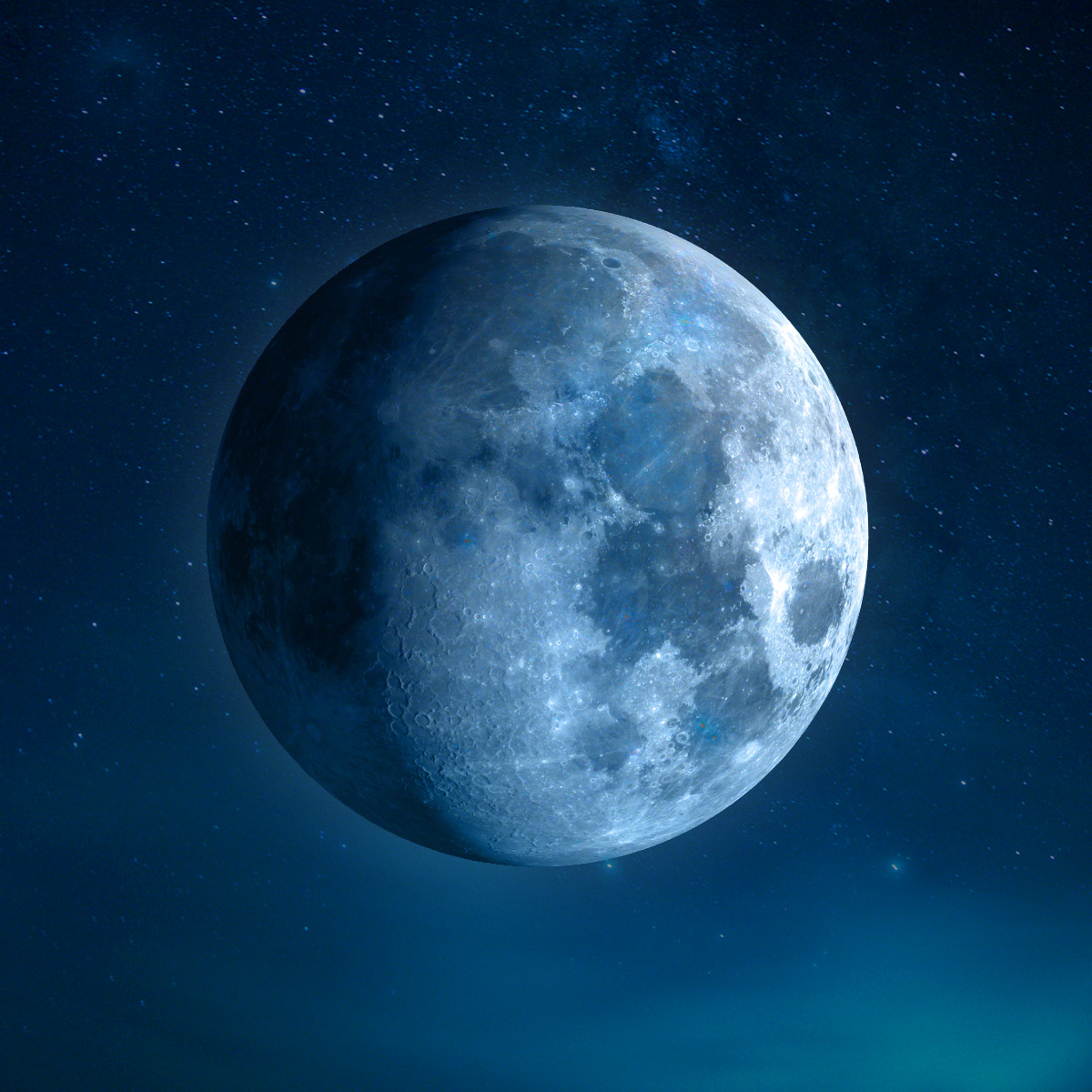
The moon shifts from night to night as it moves through the lunar cycle, which comprises eight visible phases. Today is day 20 of this cycle. Keep reading to discover more about tonight’s moon.
What phase is the moon in today?
As of Wednesday, Dec. 10, the moon is in its Waning Gibbous phase. This indicates that 64% of the moon is illuminated this evening, according to NASA’s Daily Moon Observation.
Even without telescopes, there are many features to observe tonight. Landmarks such as Mare Vaporum, Copernicus Crater, and Aristarchus Plateau should be visible. Binoculars will help reveal Grimaldi Basin, Clavius Crater, and the Alps Mountains. Those equipped with a telescope might catch sight of the Caucasus Mountains, Fra Mauro Highlands, and Rima Ariadaeus.
When will the next full moon take place?
The upcoming full moon is set for Jan. 3.
What are the phases of the moon?
NASA outlines that the Moon experiences a cycle of approximately 29.5 days, during which we see its various phases. Although the same side of the Moon is always visible to us, the way sunlight strikes it alters as it orbits Earth, causing it to look full, semi-illuminated, or completely obscured. The cycle includes eight primary phases:
New Moon – The moon lies between Earth and the sun, resulting in the side visible to us being dark (invisible to the eye).
Waxing Crescent – A small sliver of light starts to show on the right side (Northern Hemisphere).
First Quarter – Half of the moon is illuminated on the right side, appearing as a half-moon.
Waxing Gibbous – More than half is lit, but it hasn’t reached full brightness yet.
Full Moon – The full face of the moon is lit and entirely visible.
Waning Gibbous – The moon starts to lose its light on the right side (Northern Hemisphere).
Third Quarter (or Last Quarter) – Another half-moon, but this time the left side is illuminated.
Waning Crescent – A thin sliver of light lingers on the left side before it becomes dark again.