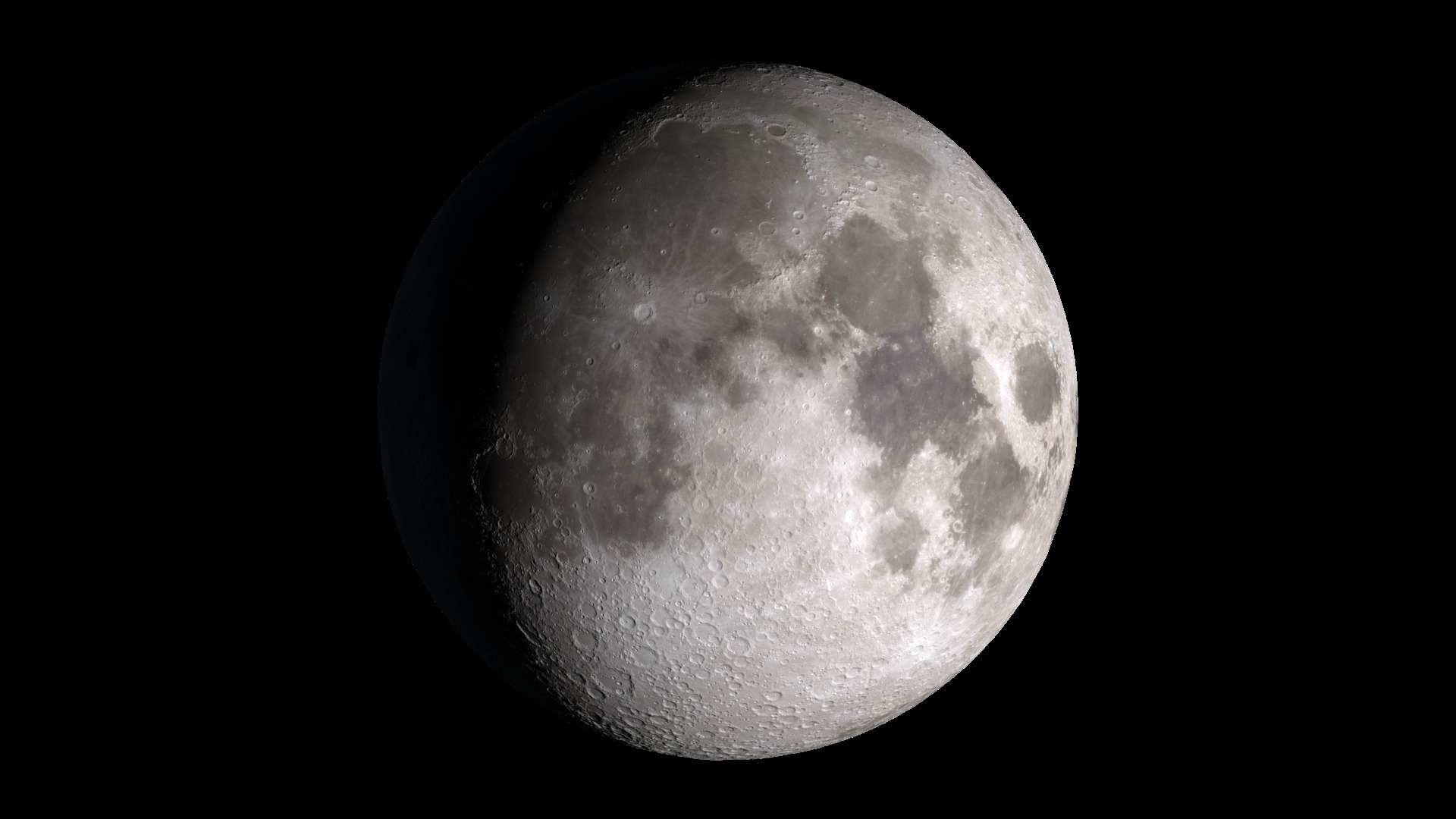
This evening marks the Third Quarter, indicating that just half of the moon is visible. The Third Quarter represents the latter half moon in the lunar cycle, with the left side shining in the Northern Hemisphere.
What is the current moon phase?
As of Thursday, Dec. 11, the moon phase is Third Quarter. This signifies that 53% of the moon is illuminated tonight, based on NASA’s Daily Moon Observation.
Even without telescopes, you can identify features such as the Tycho and Kepler Craters and the Oceanus Procellarum. With binoculars, you can view the Grimaldi Basin, Clavius Crater, and the Alps Mountains. A telescope will expose the Caucasus Mountains, Apollo 15, and the Rima Ariadaeus.
When will the next full moon occur?
The upcoming full moon is on Jan. 3.
What are the phases of the moon?
NASA clarifies that the Moon undergoes a cycle of approximately 29.5 days, displaying various phases. We consistently observe the same side of the Moon, but the sunlight shifts as it revolves around Earth, creating appearances of full, half-lit, or obscured phases. The cycle comprises eight primary phases:
New Moon – The moon is positioned between the Earth and the sun, rendering the visible side dark.
Waxing Crescent – A slight sliver of light appears on the right side (Northern Hemisphere).
First Quarter – The right side of the moon is illuminated halfway, appearing as a half-moon.
Waxing Gibbous – More than half is lit, yet not completely full.
Full Moon – The entire face of the moon is aglow.
Waning Gibbous – The moon begins to diminish its light on the right side (Northern Hemisphere).
Third Quarter (or Last Quarter) – Another half-moon phase, with the left side illuminated.
Waning Crescent – A narrow sliver of light lingers on the left side before fading into darkness once more.