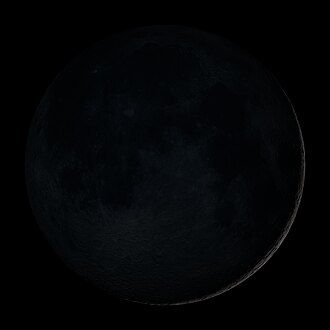
There isn’t a lot to observe on the moon’s surface this evening, but with some attentive watching, you might notice a few intriguing features. As we near the New Moon, this represents one of the final chances to see anything for the next several nights.
What is the current moon phase?
As of Monday, Dec. 15, the current phase of the moon is Waning Crescent. This signifies that 18% of the moon is illuminated tonight, according to NASA’s Daily Moon Observation.
This evening, without optical tools, you’ll be capable of seeing just the Aristarchus Plateau. Nevertheless, with binoculars, the Grimaldi Basin and the Gassendi Crater will also be visible. A telescope will additionally disclose the Reiner Gamma.
When is the upcoming full moon?
The forthcoming full moon will occur on Jan. 3. The previous full moon was on Dec. 4.
What exactly are moon phases?
Per NASA, the Moon completes a rotation in approximately 29.5 days, during which it transitions through various phases. We always view the same hemisphere, but as it revolves around Earth, the sunlight affects it differently. This is the reason it may appear full, partially illuminated, or sometimes not visible at all. There are eight primary phases in the cycle:
New Moon – The moon is situated between Earth and the sun, resulting in the side facing us being dark (invisible to the observer).
Waxing Crescent – A small sliver of brightness emerges on the right side (Northern Hemisphere).
First Quarter – Half of the moon is illuminated on the right side, resembling a half-moon.
Waxing Gibbous – More than half is lit up, yet it is not fully illuminated.
Full Moon – The complete surface of the moon is lit and entirely visible.
Waning Gibbous – The moon begins to lose light on the right side (Northern Hemisphere).
Third Quarter (or Last Quarter) – Another half-moon occurs, but the left side is illuminated.
Waning Crescent – A slender sliver of light lingers on the left side before it becomes dark again.