The Moon is starting to come out of complete darkness, now displaying merely a subtle shimmer of light. In the nights ahead, it will appear larger and brighter, soon uncovering craters, mares, and other fascinating features on its surface.
What is the moon phase today?
As of Monday, Dec. 22, the moon phase is Waxing Crescent. According to NASA’s Daily Moon Observation, 6% of the moon will be illuminated this evening. With such a small portion of the Moon lit up, nothing on its surface can be seen tonight. Check back tomorrow.
When will the next full moon happen?
The upcoming full moon will take place on Jan. 3. The most recent full moon occurred on Dec. 4.
What do moon phases mean?
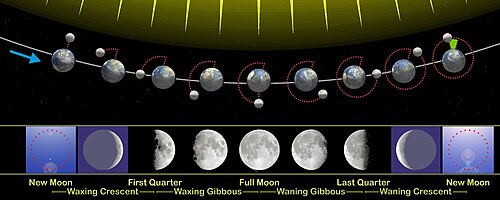
According to NASA, the Moon requires approximately 29.5 days to finish a complete cycle, known as the lunar cycle. During this duration, it transitions through a series of phases as it revolves around Earth. Although the same hemisphere of the Moon consistently faces us, the sunlight reflecting off its surface shifts, causing it to appear fully lit, partially illuminated, or entirely dark at various stages in the cycle. This process is classified into eight primary lunar phases:
New Moon – The moon is positioned between Earth and the sun, rendering the visible side dark (not perceivable by the eye).
Waxing Crescent – A small crescent of light appears on the right side (Northern Hemisphere).
First Quarter – Half of the moon is illuminated on the right side, resembling a half-moon shape.
Waxing Gibbous – More than half is lit up, yet it is not completely full.
Full Moon – The entire surface of the moon is lit and completely visible.
Waning Gibbous – The moon starts to diminish its light on the right side (Northern Hemisphere).
Third Quarter (or Last Quarter) – Another half-moon phase, but the left side is now illuminated.
Waning Crescent – A slim crescent of light remains on the left side before it goes dark again.