We are well into the fresh lunar cycle, and by the fourth day, more of the Moon’s surface becomes visible. With over 10% illumination at this point, keep reading to find out what you can observe on the Moon tonight.
What is the Moon phase today?
As of Saturday, February 21, the Moon phase is the Waxing Crescent. According to NASA’s Daily Moon Guide, 16% of the Moon will be illuminated this evening.
Even without any visual equipment, you should be able to observe some surface features on the Moon tonight. Notable sights include the Mares Crisium and Fecunditatis. With a telescope or binoculars, you can also view the Endymion Crater.
When is the upcoming Full Moon?
The next Full Moon will take place on March 3. The previous Full Moon occurred on February 1.
What are the phases of the Moon?
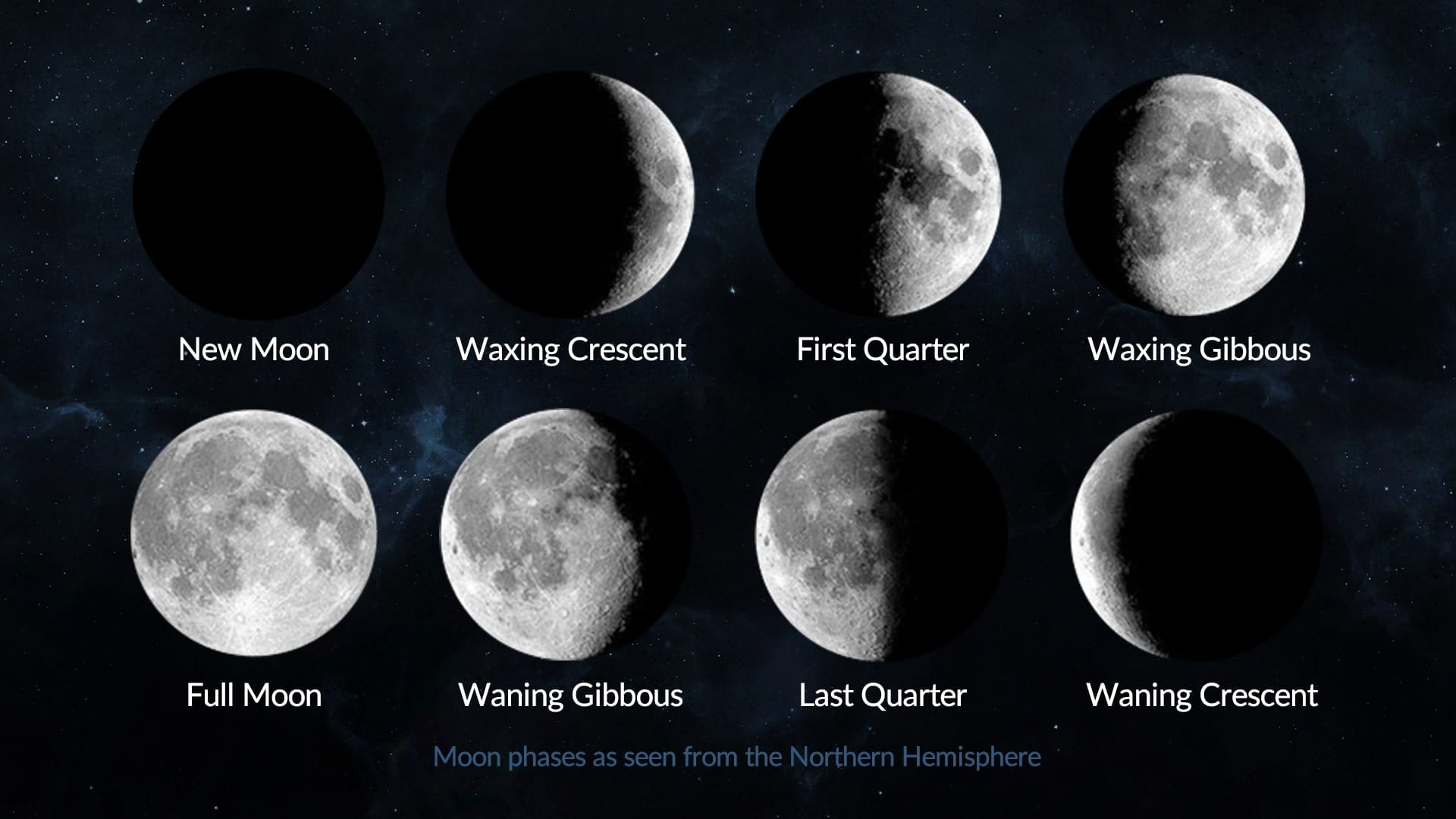
NASA states that the Moon completes a full orbit around Earth in approximately 29.5 days, going through eight distinct phases. Although we consistently see the same side of the Moon, the illuminated portion changes as it revolves. The angle at which sunlight reflects off the Moon’s surface leads it to appear full, partially lit, or almost dark at various times. The eight phases are:
New Moon – The Moon is positioned between Earth and the sun, rendering the visible side dark (invisible to the eye).
Waxing Crescent – A small crescent of light appears on the right side (Northern Hemisphere).
First Quarter – Half of the Moon is illuminated on the right side, resembling a half-Moon.
Waxing Gibbous – More than half is illuminated, but it has not reached full status.
Full Moon – The entirety of the Moon’s face is illuminated and clearly visible.
Waning Gibbous – The Moon begins to lose light on the right side (Northern Hemisphere).
Third Quarter (or Last Quarter) – Another half-Moon, with the left side illuminated.
Waning Crescent – A narrow crescent of light remains on the left side before it goes dark once more.