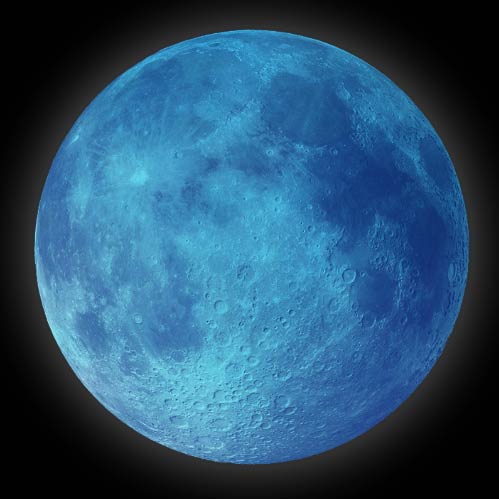
The Moon is presently in its Third Quarter phase, indicating it is half-lit and half-shadowed. There is still a lot to observe on its surface, so continue reading to find out what you can identify.
What is today’s Moon phase?
As of Saturday, Jan. 10, the Moon phase is Third Quarter. According to NASA’s Daily Moon Guide, 51% of the Moon will be illuminated this evening.
If you look carefully, there should be much to see tonight. With the naked eye, you can catch a glimpse of the Mare Imbrium, Copernicus Crater, and the Aristarchus Plateau. With binoculars, you can also observe the Grimaldi Basin, Alphonsus Crater, and the Mare Humorum. If you have a telescope, set it up to view the Apollo 14 landing site and the Schiller Crater.
When is the next Full Moon?
The upcoming Full Moon will take place on Feb. 1. The previous full moon occurred on Jan. 3.
What are Moon phases?
NASA reveals that the Moon takes approximately 29.5 days to complete a full orbit, known as the lunar cycle. As it orbits Earth, the Moon undergoes several distinct phases. Although the same side of the Moon consistently faces Earth, the sunlight striking it varies based on its orbital position. This results in the Moon appearing fully illuminated, partially illuminated, or entirely dark at different moments. The lunar cycle encompasses eight main phases:
New Moon – The Moon is positioned between Earth and the sun, causing the side we see to be dark (invisible to us).
Waxing Crescent – A small sliver of light becomes visible on the right side (Northern Hemisphere).
First Quarter – Half of the Moon is illuminated on the right side, resembling a half-Moon.
Waxing Gibbous – More than half is lit, but it is not yet complete.
Full Moon – The whole face of the Moon is lit and fully visible.
Waning Gibbous – The Moon begins to lose light on the right side (Northern Hemisphere).
Third Quarter (or Last Quarter) – Another half-Moon, but now the left side is illuminated.
Waning Crescent – A narrow sliver of light remains on the left side before it goes dark again.