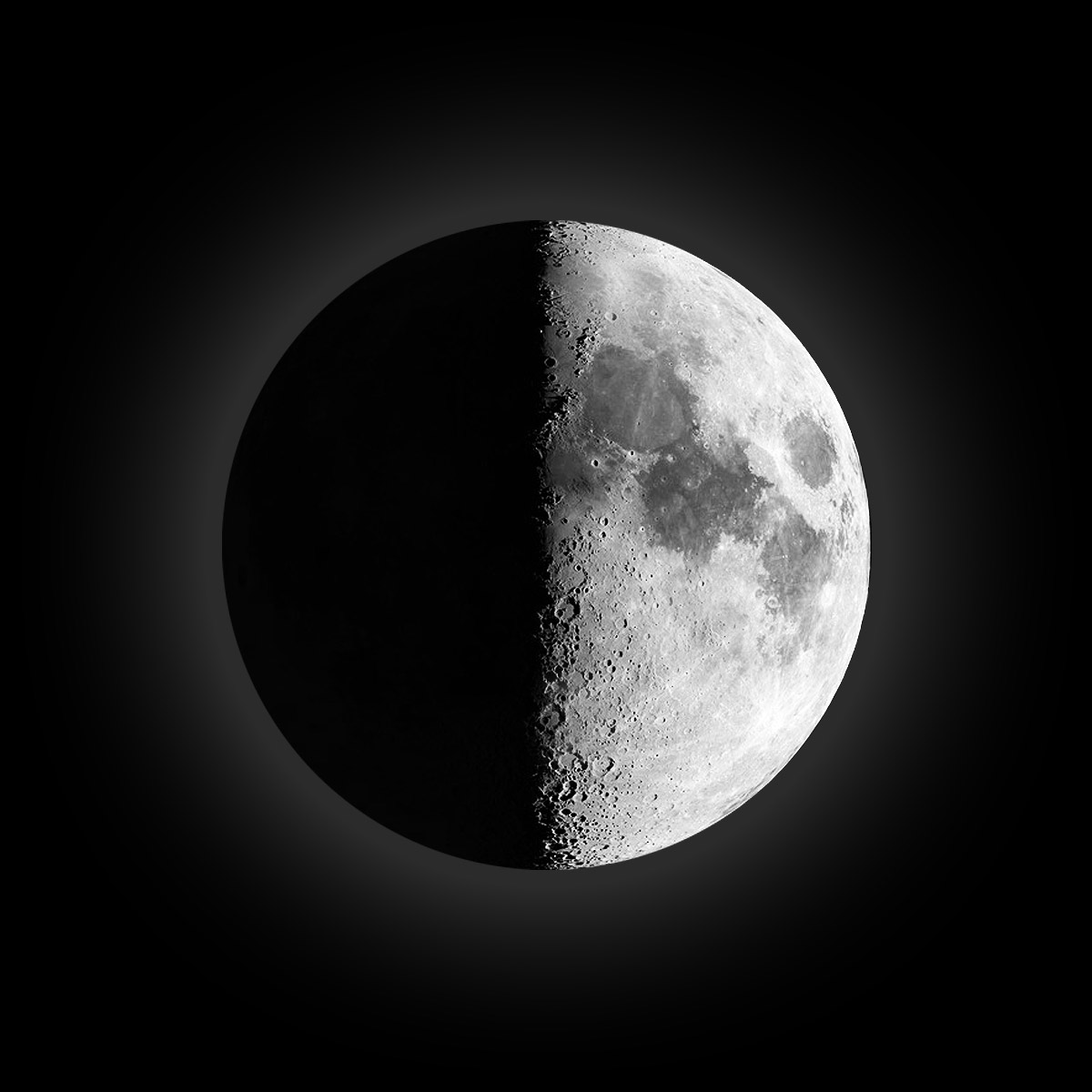
We are nearing the Third Quarter, signifying that the Moon is almost half shadowed. This is the second to last phase prior to the New Moon, when it will be completely hidden from view.
What is the current Moon phase?
As of Friday, Jan. 9, the Moon phase is Waning Gibbous. Based on NASA’s Daily Moon Guide, 61% of the Moon will be illuminated this evening.
You can see features on the Moon’s surface unaided, like the Mares Imbrium and Vaporum, along with the Aristarchus Plateau. Using binoculars will improve your view to include the Grimaldi Basin, Apennine Mountains, and the Mare Humorum, while a telescope will unveil the Apollo 14 landing site, Schiller Crater, and Rima Ariadaeus.
When will the next Full Moon occur?
The upcoming Full Moon is set for Feb. 1. The most recent full moon took place on Jan. 3.
What are the phases of the Moon?
NASA states that the Moon requires approximately 29.5 days to finish a complete orbit, known as the lunar cycle. As it travels around Earth, the Moon goes through distinct phases. Although the same hemisphere of the Moon consistently faces Earth, the sunlight that bounces off it changes with its position in orbit. This results in the Moon appearing fully illuminated, partially illuminated, or entirely dark at various times. The lunar cycle consists of eight primary phases:
New Moon – The Moon is positioned between Earth and the sun, causing the side we view to be dark.
Waxing Crescent – A small portion of light becomes visible on the right side (Northern Hemisphere).
First Quarter – Half of the Moon’s surface is lit on the right side, resembling a half-Moon.
Waxing Gibbous – More than half is illuminated, but not completely.
Full Moon – The entire face of the Moon is lit and observable.
Waning Gibbous – The Moon starts to lose illumination on the right side (Northern Hemisphere).
Third Quarter (or Last Quarter) – Another half-Moon, with the left side illuminated.
Waning Crescent – A slender sliver of light remains on the left side before it dims again.