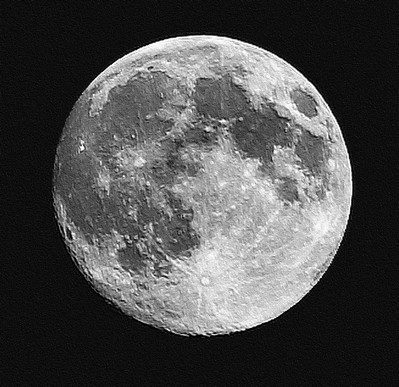
The Full Moon is nearing, bringing brightness to the sky tonight. There’s a lot to see, with or without telescopes, so continue reading to learn what you can observe.
What is the current Moon phase?
As of Monday, March 2, the Moon phase is Waxing Gibbous. According to NASA’s Daily Moon Guide, 98% of the Moon will be illuminated tonight.
With the unaided eye, you can spot the Mares Vaporum and Crisium, along with the Aristarchus Plateau. Binoculars will uncover the Endymion Crater, Grimaldi Basin, and the Archimedes Crater. A telescope will display the Apollo 16 landing site, the Rima Hyginus, and the Caucasus Mountains.
When will the next Full Moon occur?
The next Full Moon is on March 3. The previous Full Moon took place on Feb. 1.
What are the phases of the Moon?
As per NASA, the Moon takes roughly 29.5 days to circle Earth, transitioning through eight phases in the lunar cycle. The same side of the Moon consistently faces us, but the sunlight on its surface varies, resulting in different appearances from Earth, ranging from fully lit to a slender sliver or almost completely dark. The eight phases include:
New Moon – The Moon is situated between Earth and the Sun, causing the visible side to be dark.
Waxing Crescent – A small strip of light becomes visible on the right side (Northern Hemisphere).
First Quarter – Half of the Moon glows on the right side, resembling a half-Moon.
Waxing Gibbous – More than half is illuminated, but not completely.
Full Moon – The entire surface of the Moon is lit up.
Waning Gibbous – The Moon begins to lose light on the right side (Northern Hemisphere).
Third Quarter (or Last Quarter) – Another half-Moon, with the left side illuminated.
Waning Crescent – A slender strip of light lingers on the left side before it darkens again.