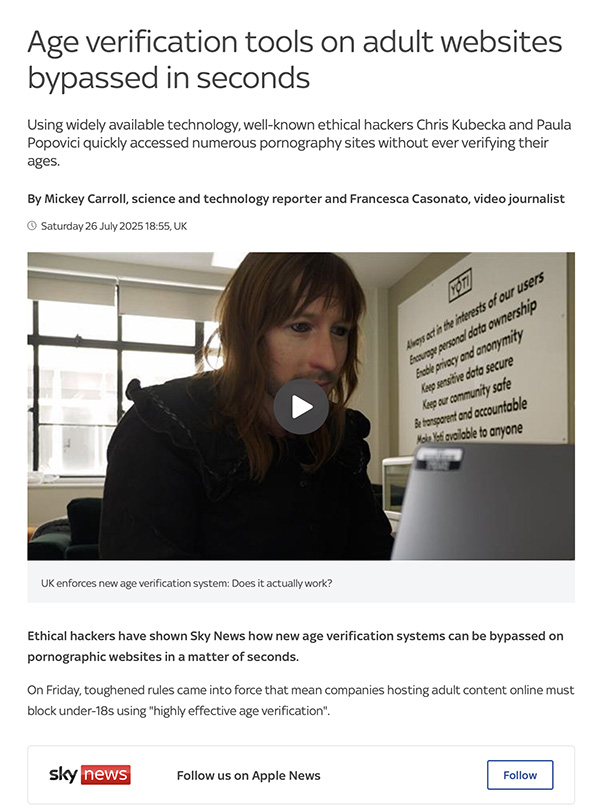
Age-verification regulations are being rolled out worldwide, mandating that sites featuring explicit material must gather personal information to ensure users are aged 18 or older. Legislators claim these regulations shield minors from adult content, yet specialists caution about risks to privacy and security. Research shows these regulations might not successfully prevent minors from accessing adult websites. The ethical implications of existing age-verification systems are under scrutiny, with professionals proposing device-level filters as a viable alternative.
Current methods rely on platforms, necessitating websites to conduct age verification, which often falls short. A study highlighted a rise in VPN inquiries coinciding with the implementation of these regulations, suggesting attempts to bypass them. Mike Stabile from the Free Speech Coalition criticizes these measures as a form of censorship. Fears of data breaches, similar to the Discord incident, dissuade adults from visiting adult sites. Certain legislators advocate for these regulations to limit access to porn, with Project 2025 proposing a porn prohibition.
Device-level filters are suggested as an ethical approach. Robbie Torney from Common Sense Media advocates for privacy-conscious strategies like California’s AB 1043, which mandates operating systems to inquire about age during initial setup, generating an age bracket indication to restrict underage users. This method, endorsed by Aylo and advocates for free speech, is regarded as both effective and respectful of privacy.
Sarah Gardner from Heat Initiative favors device-level verification to minimize the data shared with applications. Apple already implements device-level protections. However, AB 1043 is applicable solely to device manufacturers and app stores, not to websites. Stabile pushes for the extension of AB 1043 to adult websites to bar minors without necessitating adult biometric data.
Pornhub has called on tech leaders to facilitate device-level age verification. The ACLU is observing these changes for privacy safeguarding. The likelihood of tech firms adopting this strategy remains unclear. Microsoft has opted not to comment, while Apple and Google have pointed to existing protocols and their dedication to online child safety.
Torney proposes a multi-layered strategy, distributing responsibility across both websites and operating systems. Despite ongoing initiatives, no approach is entirely infallible, but a comprehensive system has the potential to improve youth safety and wellbeing.